RFID (Radio Frequency Identification) is a technology that allows products to be identified wirelessly and without physical contact.
Unlike barcodes, items do not need to be scanned individually or be directly visible. RFID readers can detect multiple products at the same time – automatically and without manual scanning.
Because of this, RFID is increasingly used when large quantities of textile products need to be identified quickly and reliably.
When Suddenly Thousands of Products Need to Be Counted
Imagine you are responsible for a new collection or a complete teamwear program.
In the warehouse there are thousands of items:
- jerseys
- training apparel
- fan merchandise
- retail products
Now it's time for inventory.
With traditional barcodes, that usually means:
- Scanning every single product.
- Box by box.
- Item by item.
This takes time – and mistakes are almost unavoidable.
This is where RFID changes the process. Instead of scanning each item individually, an RFID system can detect many products at once. In many cases, it is enough to move a box or pallet through a reader.
What used to take hours can suddenly be done in minutes.
Why More and More Brands Are Looking at RFID
The textile industry is changing rapidly.
Products today are expected to do more than just look good. They increasingly need to:
- be uniquely identifiable
- be traceable along the supply chain
- connect to digital product information
This is particularly relevant in sports, merchandising, and fashion retail.
For example, brands are looking for:
- faster store inventory processes
- better supply chain transparency
- improved control over product availability
- digital product information for consumers
RFID is one of the technologies that can make these improvements possible.
Why a Textile Embellishment Specialist Talks About RFID
At dekoGraphics, we have spent more than 30 years focusing on how logos and embellishments perform on textiles.
Our work traditionally revolves around elements such as:
- club logos
- sponsor logos
- names and numbers
- patches and labels
- high-quality heat transfers
But textile embellishment is evolving.
Beyond visual branding, a new layer is emerging: products increasingly need to be identifiable and digitally connected.
As part of r-pac, a global leader in branding, labeling and packaging solutions, we now look at this development from a broader perspective.
While we continue to specialize in high-quality heat transfers and textile embellishment, the collaboration also opens access to technologies such as:
- RFID tagging
- NFC-based product interaction
- smart labels and hangtags
This creates an interesting intersection between branding, product identification, and digital products.
How RFID Works
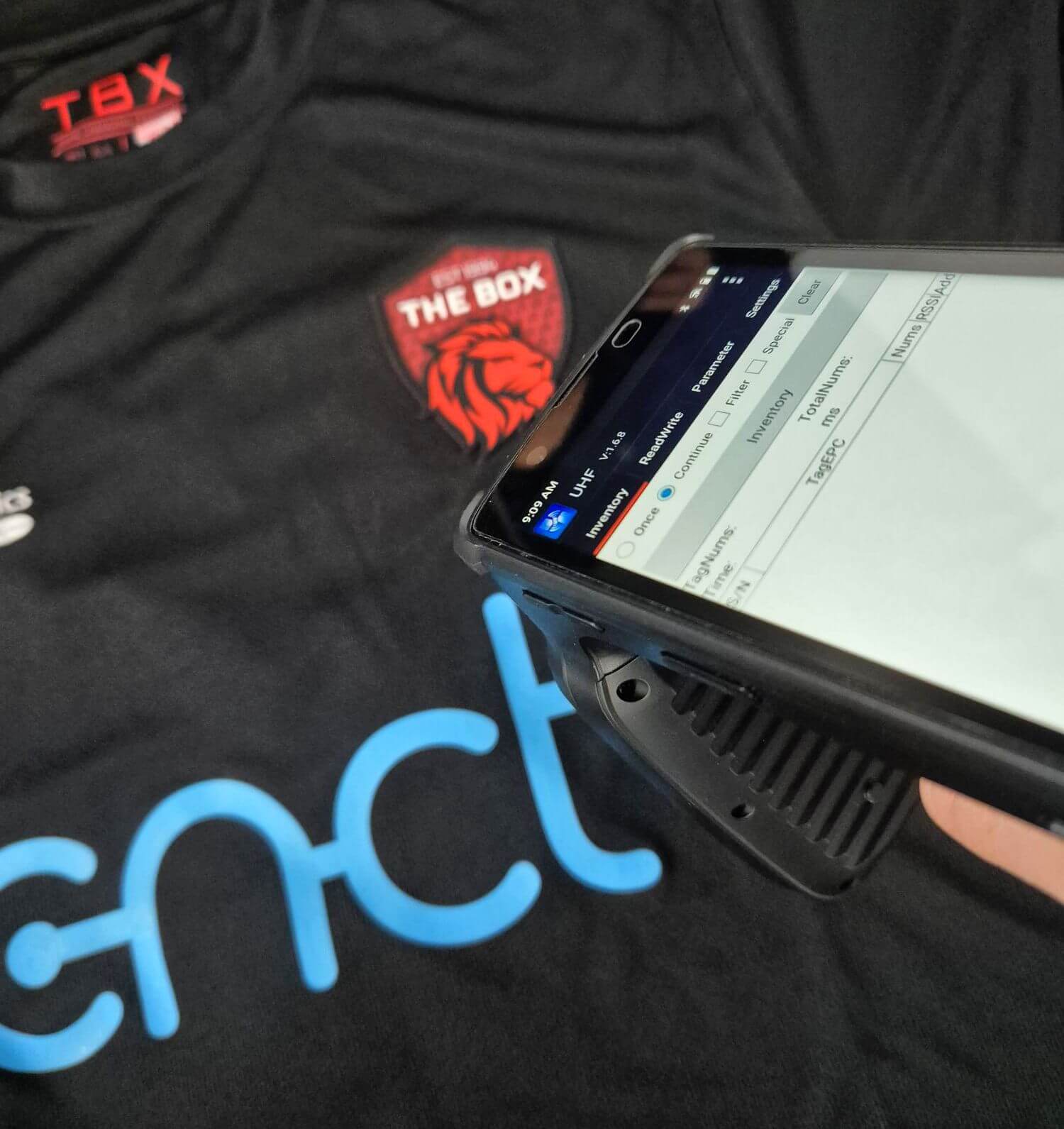
An RFID system typically consists of three components:
- RFID Tag (Transponder): A small chip with an antenna that usually contains a unique serial number (UID or EPC).
- RFID Reader: A device that emits radio waves and detects RFID tags.
- Software System: Software that processes the captured data and assigns it to a product or database.
RFID vs Barcode – The Key Difference
Many processes in textile retail still rely on barcodes.
They work reliably – but they have clear limitations.
Barcode
- requires direct line of sight
- items must be scanned individually
- processes remain largely manual
RFID
- contactless scanning
- multiple items detected simultaneously
- automation becomes possible
When large quantities of products are involved, this difference can be significant.
The Three Main RFID Systems
RFID technologies operate at different frequency ranges. These ranges mainly differ in reading distance and typical applications.
Low Frequency (LF)
LF systems operate at very low frequencies and have a short reading range.
Typical characteristics:
- very short range
- stable signal transmission
- relatively low data transfer rate
Common applications include:
- animal identification
- access control systems
- industrial identification
In the textile industry, LF plays only a minor role today.
High Frequency (HF)
HF RFID operates at 13.56 MHz and offers a larger reading distance.
Typical characteristics:
- reading distance range from a few centimetres up to typically around 50 cm.
- stable data transmission
- widely used for identification systems
Typical applications include:
- access cards
- library systems
- ticketing solutions
- industrial identification
Ultra High Frequency (UHF / RAIN RFID)
The most important RFID technology for retail and logistics is UHF, often referred to as RAIN RFID.
Typical characteristics:
- reading distances of several metres
- simultaneous detection of many items
- very high reading speed
Typical applications include:
- warehouse logistics
- inventory counting
- supply chain tracking
- retail inventory management
Many global fashion and sports brands are already using RAIN RFID to improve visibility across their product flows.
How RFID Is Integrated into Textiles
RFID tags are now small, flexible and durable.
Depending on the application, they can be integrated into products in several ways, such as:
- RFID labels
- RFID hangtags
- sewn-in textile tags
- packaging tags
- branding elements such as labels, patches or heat transfers
Each RFID tag contains:
- a small microchip
- an antenna
When the product comes close to a reader, the tag can be detected automatically.
Typical RFID Applications in the Textile Industry
Warehousing and Fulfilment
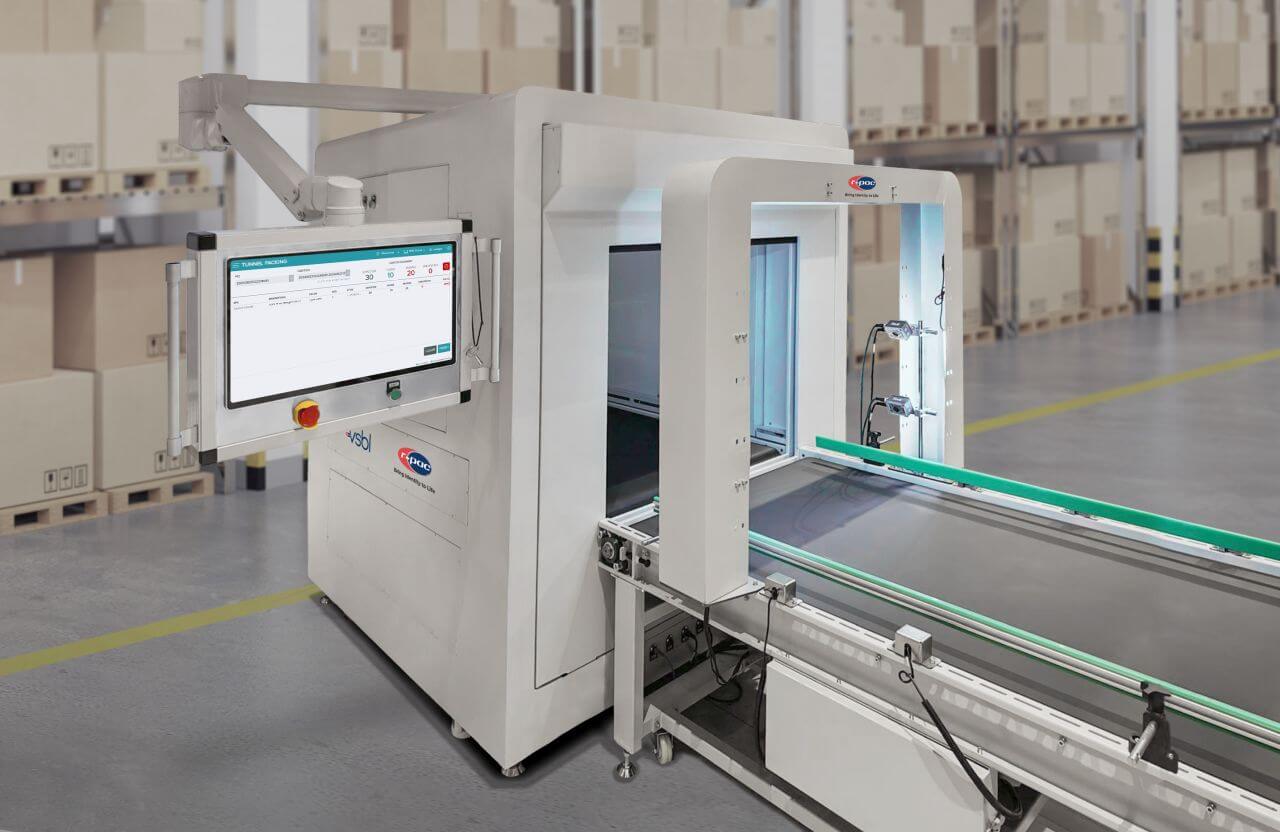
RFID allows large quantities of products to be captured quickly.
Items can be automatically detected when they:
- arrive at the warehouse
- are stored
- leave the warehouse
This reduces manual work and improves inventory accuracy.
Retail Stores

RFID is also gaining importance in physical retail environments.
Typical applications include:
- faster store inventories
- improved stock visibility
- support for omnichannel operations
Many retailers can now complete inventory checks in minutes instead of hours.
Product Identification Across the Supply Chain
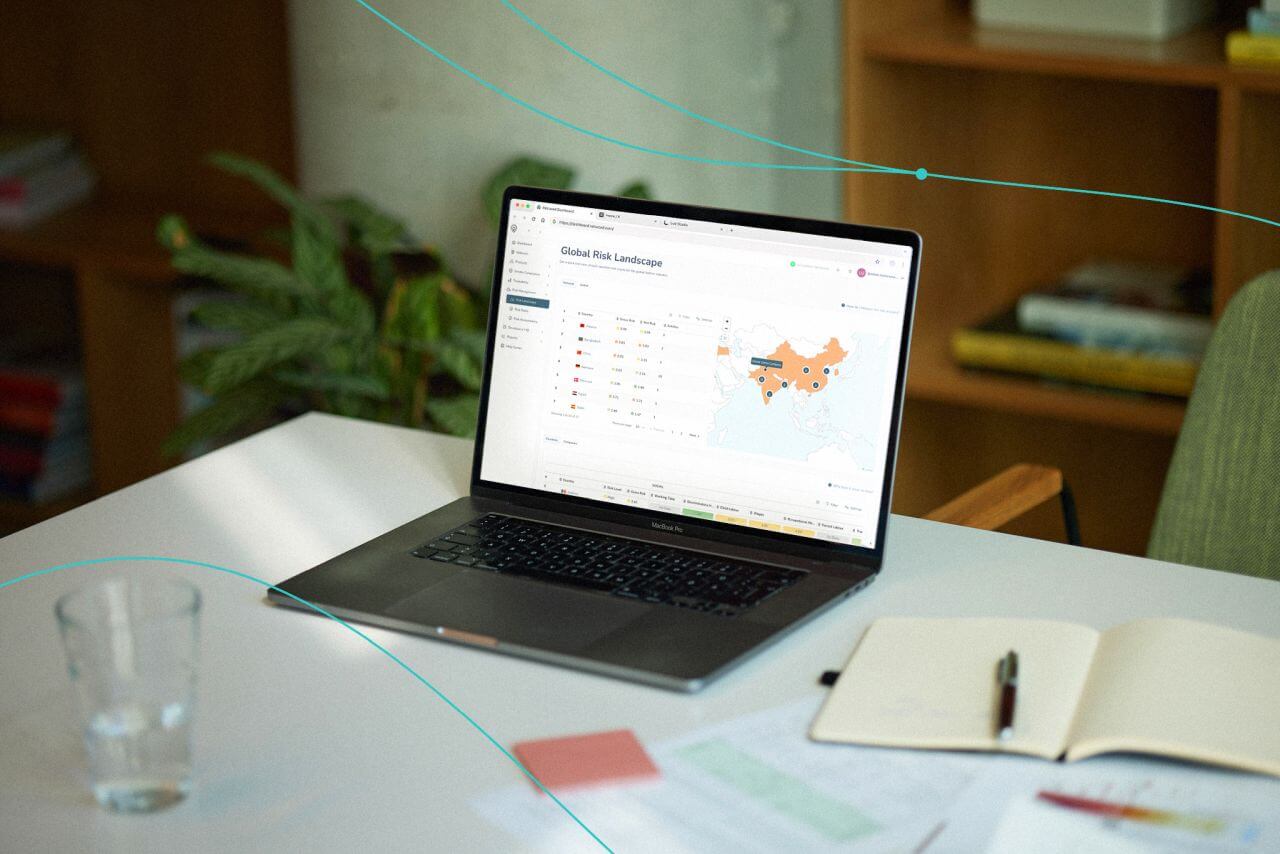
RFID enables the unique identification of products at different points along the supply chain.
This allows companies to understand:
- where a product is located
- when it has been moved
- how goods flow through the supply chain
In complex global supply chains, this transparency can be extremely valuable.
If you’d like to see how RFID is actually used in logistics, retail, and supply chains, we explain it in detail in this article:
👉 From Logo to Data Point: Why Textile Decoration Is Becoming Digital.
When Branding, RFID and NFC Come Together
As textile embellishment specialists, we always see the logo as the central element of a product.
Logos, badges and labels are not just visual elements – they are often the natural identification point of a garment.
This is where new opportunities emerge.
While RAIN RFID is mainly used for logistics and inventory processes, NFC allows direct interaction with consumers via smartphones.
One example is the TwinTag from our partner r-pac.
It combines two technologies within a single tag:
- RAIN RFID (UHF) for automatic identification in logistics and retail
- NFC for smartphone-based interaction
This allows a product to:
- be automatically identified in warehouses
- be tracked along the supply chain
- trigger digital content or services
For brands and clubs, this opens up new possibilities – from supply chain transparency to digital brand experiences.
A Possible Use Case: The Digital Product Passport
One topic currently discussed widely in the textile industry is the Digital Product Passport (DPP).
The goal is to make product information digitally accessible, such as:
- material composition
- origin of the product
- environmental impact
- care and recycling instructions
Consumers typically access this information through technologies that smartphones can read – such as NFC or QR codes.
If a product also contains RFID, it can simultaneously be detected automatically in logistics and inventory processes.
Hybrid solutions therefore connect two layers:
- automatic identification within the supply chain
- digital product information for consumers
Quick Summary: RFID in Textiles
- RFID enables wireless product identification
- items do not need to be scanned individually
- multiple products can be detected simultaneously
- UHF RFID is widely used in logistics and retail
- NFC enables smartphone interaction with products
- RFID can be integrated into labels, hangtags or textile tags
- combining RFID and NFC connects logistics processes with digital brand experiences

Conclusion: RFID Is Becoming Part of Modern Textile Processes
RFID is not a new technology – but its importance in the textile industry is growing rapidly.
The main reason: brands and retailers want to make their processes more efficient and transparent.
RFID enables:
- automatic product identification
- faster inventory processes
- greater supply chain visibility
- more efficient logistics operations
For us as specialists in textile embellishment and heat transfers, this development is particularly exciting. When branding, product identification and digital technologies come together, entirely new possibilities emerge.
A textile product is no longer just a garment. It becomes an identifiable and digital component of a brand.
A Question to End With
If textiles in the future carry not only logos but also digital identity and product information:
What role will your branding play?
TRUSTED BY


