Individual stars. Freestanding letters. Separate design elements.
These kinds of details have become a natural part of modern embroidery-style heat transfers — whether on football shirts, fashion pieces or merchandise products.
But how do these elements actually stay perfectly in place during application?
For designs like these, we work with special positioning templates that hold all elements together during the application process and are removed together with the carrier sheet afterwards.
In this article, we’ll give you a behind-the-scenes look at how these solutions are created and how standalone elements are applied with modern embroidery-style heat transfers.
How standalone elements are prepared
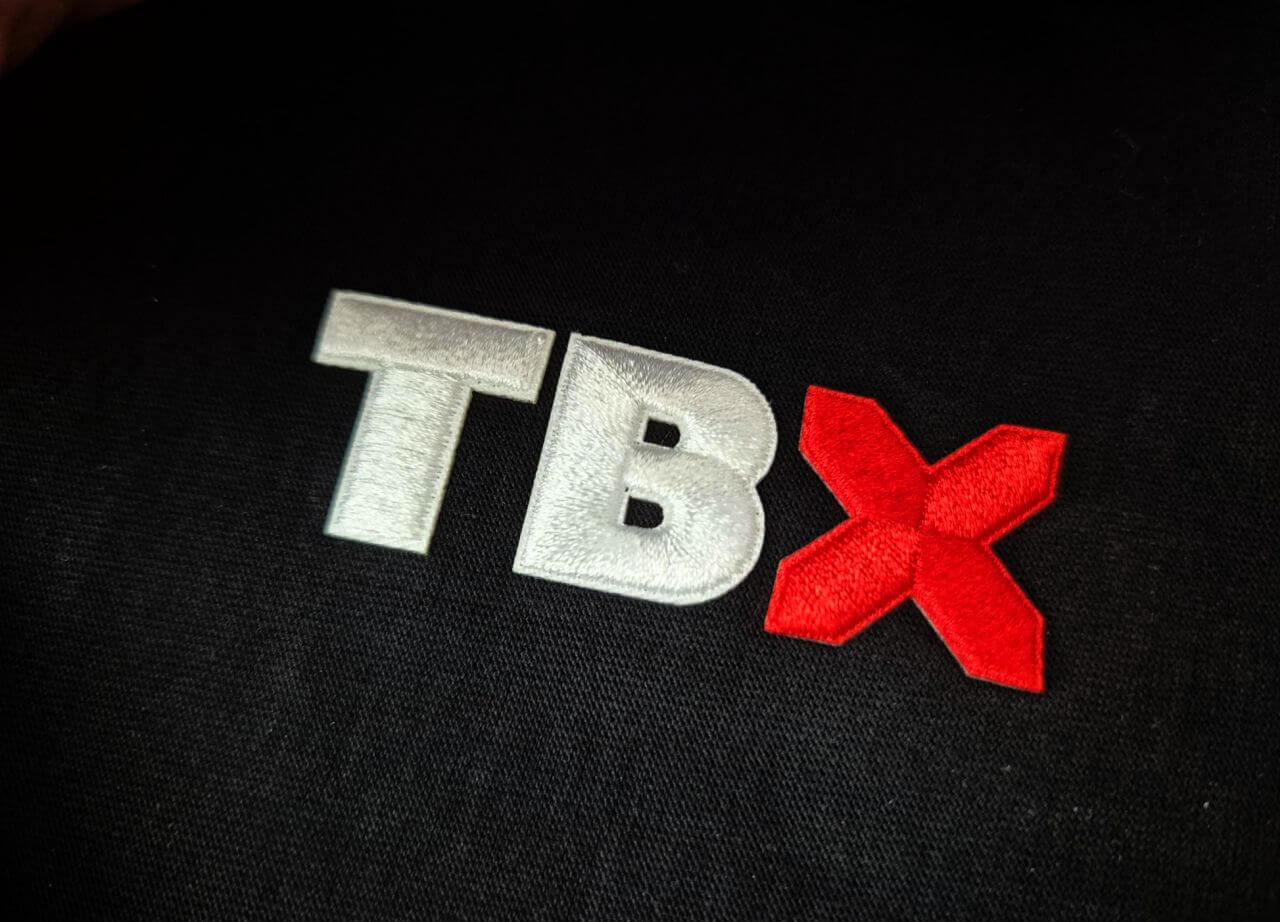
With traditional logo designs, many parts are connected. This naturally keeps the design stable.
Freestanding elements work differently.
These can include:
- individual stars,
- separate letters,
- small symbols,
- isolated elements,
- or multi-part logos with defined spacing.
Especially with embroidery-style designs, these elements are often used to create more depth, dimension and character.
To ensure everything stays properly aligned later on, the design is prepared accordingly during production.
The solution: positioning templates
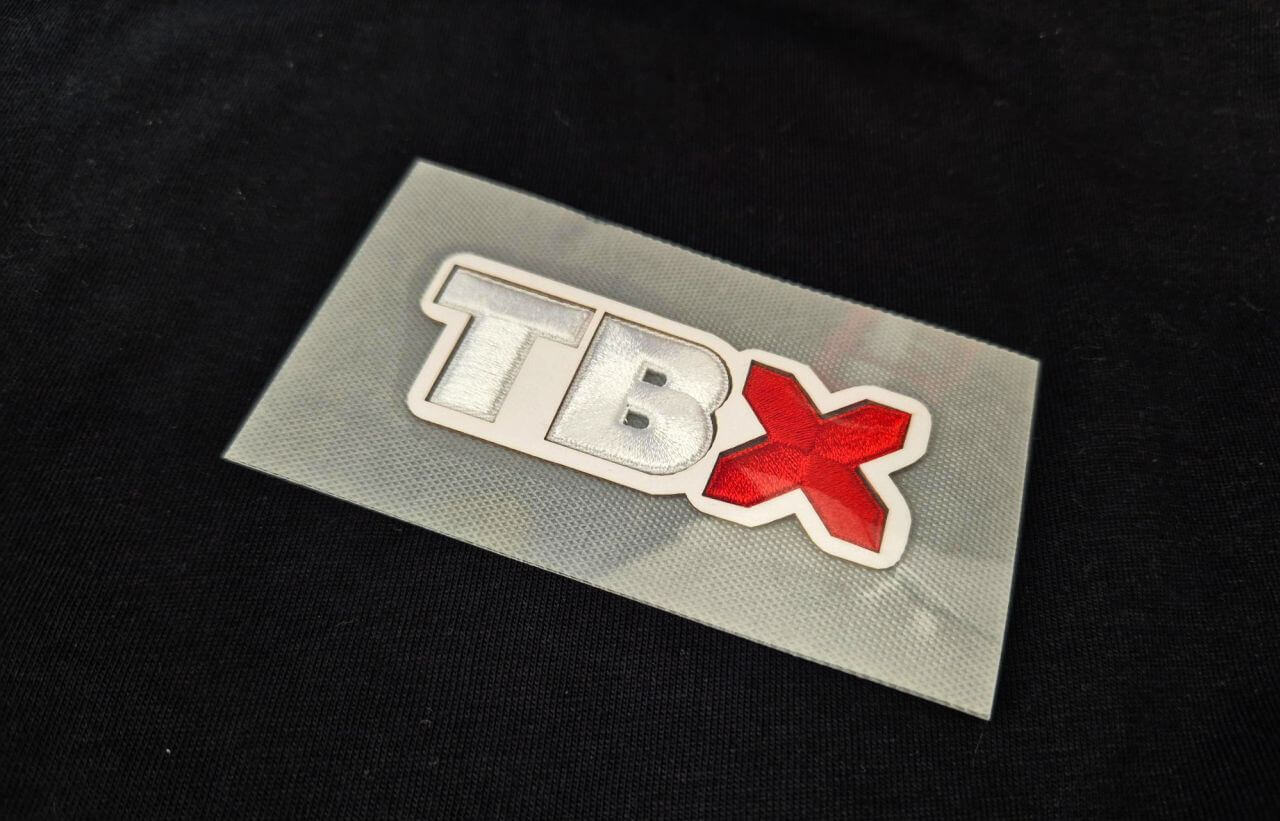
For these applications, the transfers are produced with special positioning templates.
These templates keep all freestanding elements securely together during application. At the same time, they help ensure that all elements remain properly positioned during transport and handling before application.
This allows individual stars, letters or separated elements to be applied accurately without having to manually align each part one by one.
After pressing, the template is simply removed.
How the application process works
The overall process remains very similar to a standard heat transfer application.
Step 1: Preparing the transfer
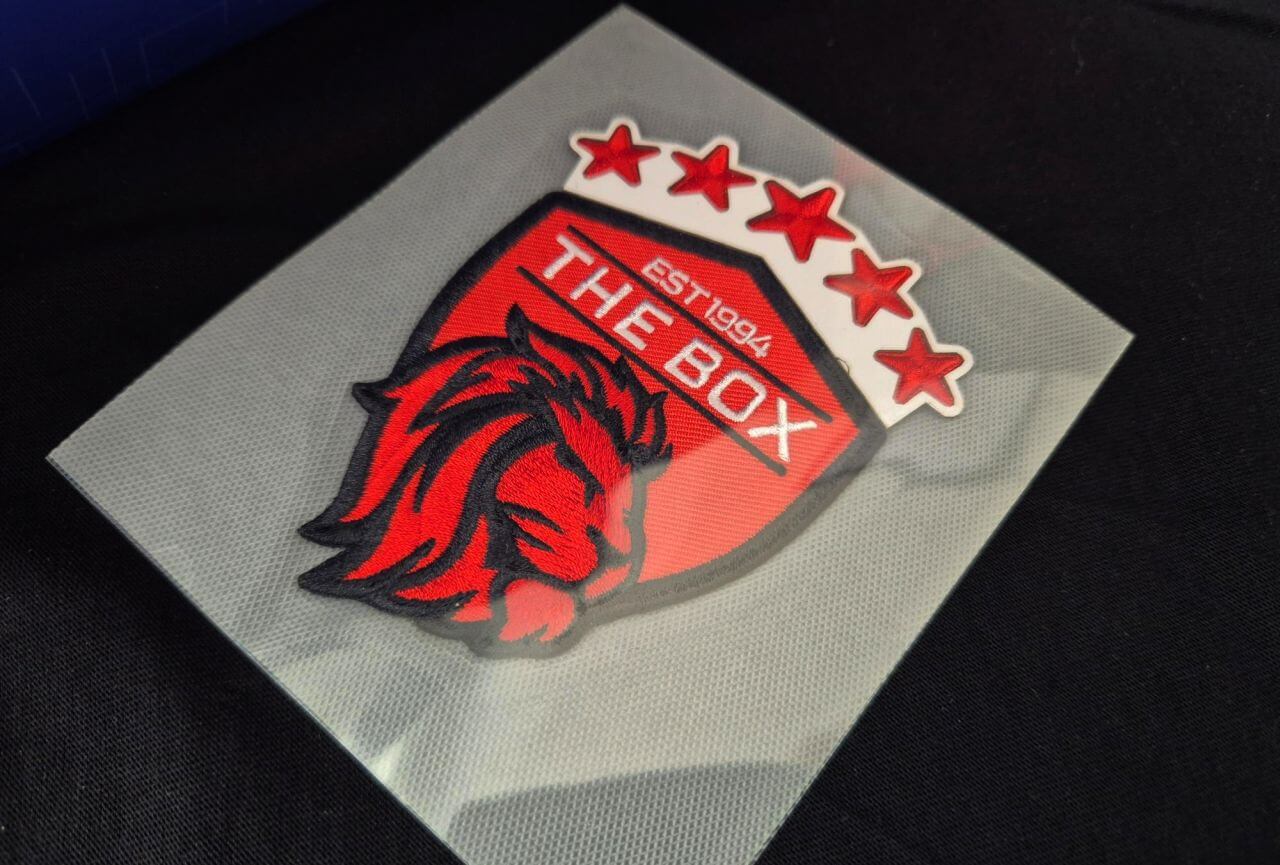
All standalone elements are already placed in their intended position.
The positioning template is directly connected to the carrier sheet and keeps:
- stars,
- letters,
- logos,
- and other standalone details
securely together.
Step 2: Positioning on the garment
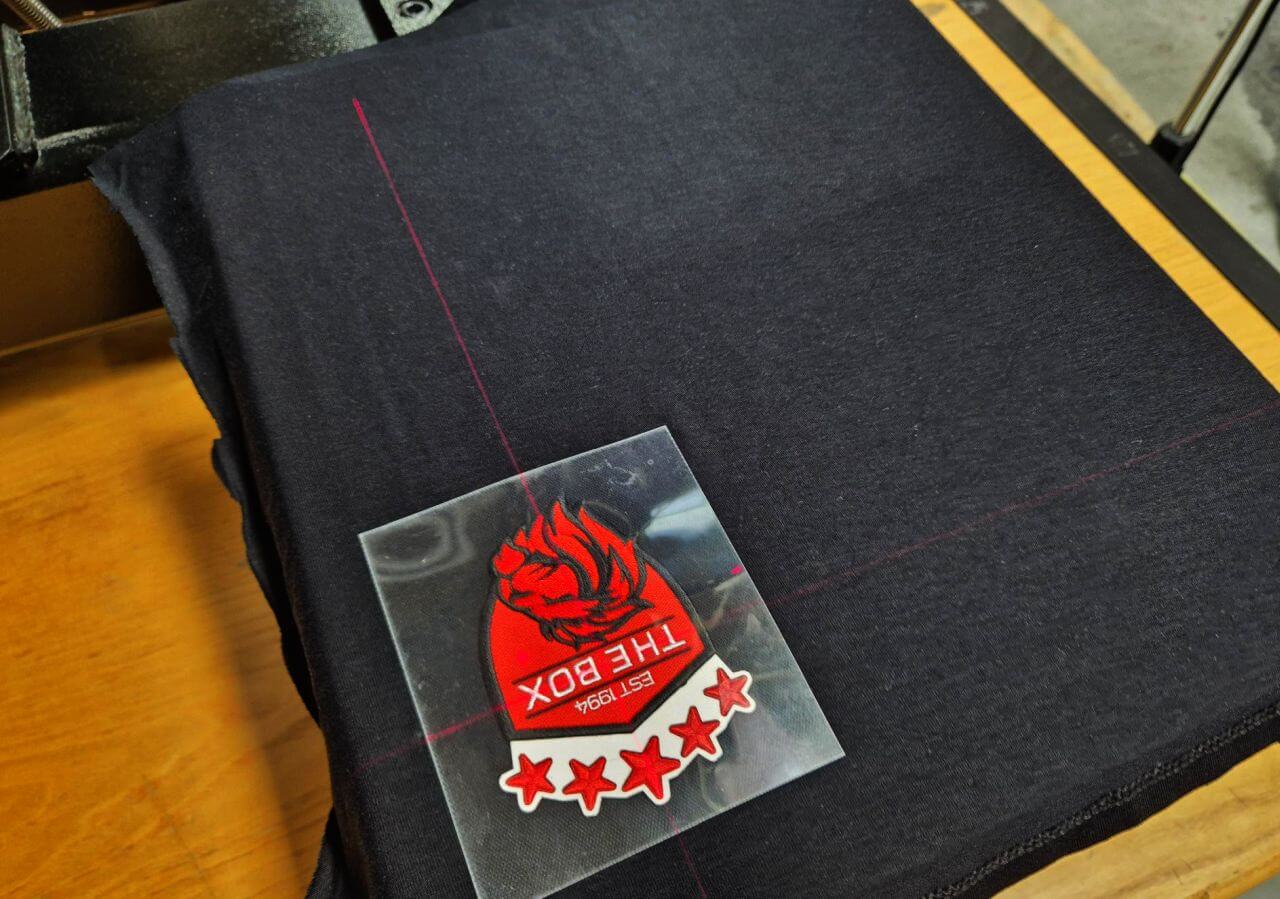
The complete transfer — including carrier sheet and positioning template — is placed onto the textile.
Since all elements are already fixed in place, the entire design remains properly aligned.
Step 3: Heat application
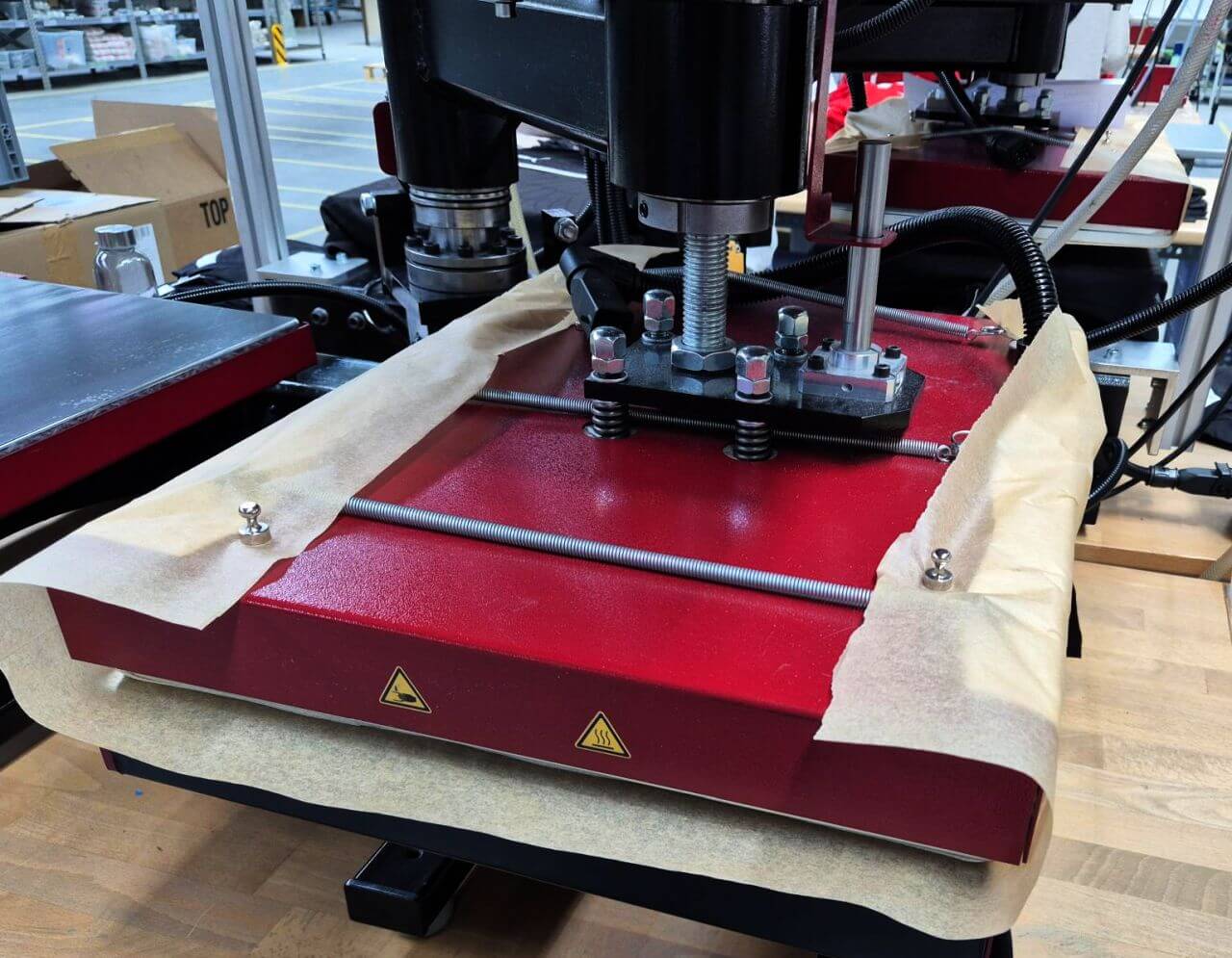
The transfer is then applied using a standard heat press.
During the pressing process, the positioning template keeps all elements securely in place.
Step 4: Removing the carrier sheet and template
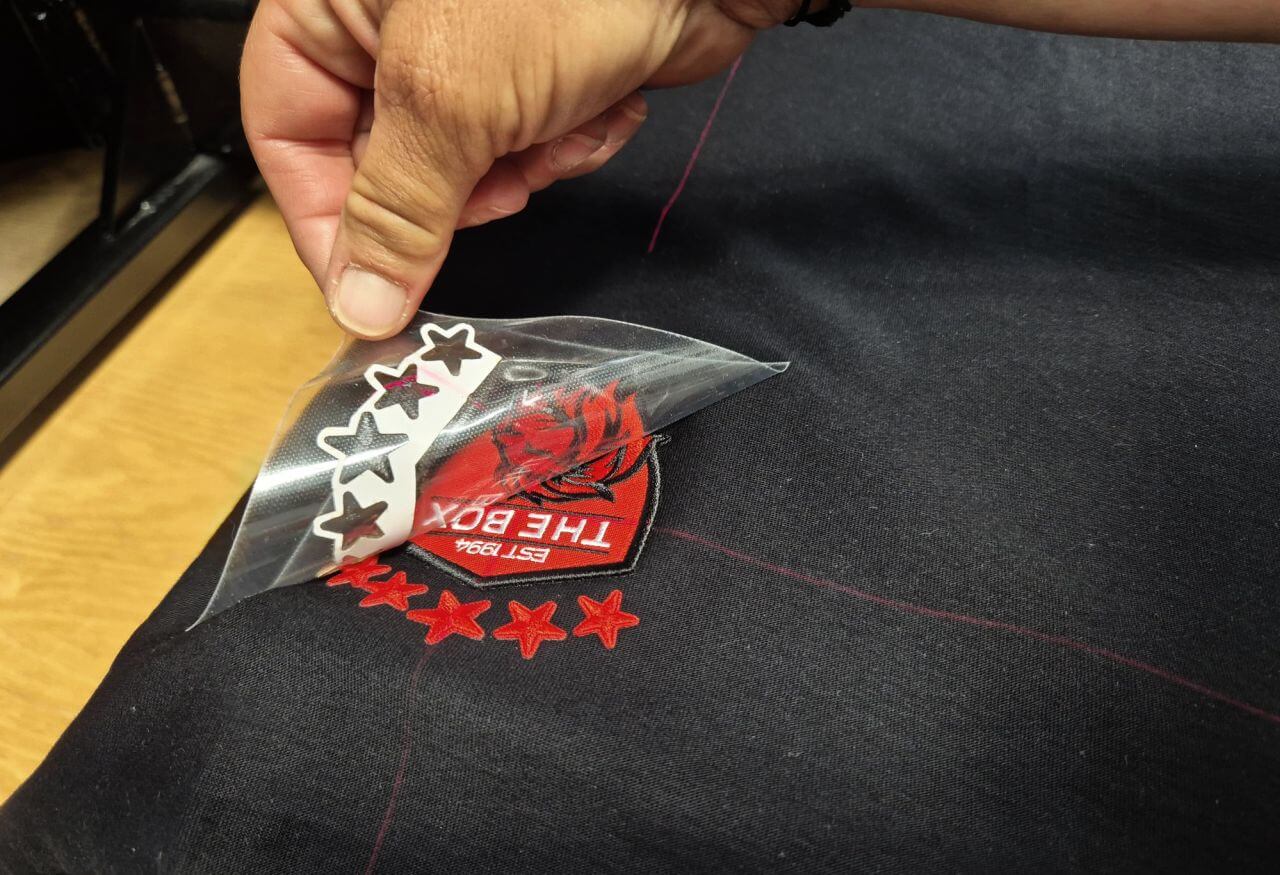
After application, the carrier sheet and positioning template are removed together in one single step.
This allows the entire design to be applied quickly, cleanly and accurately.
The result is a finished design with perfectly positioned standalone elements.
A practical football example: championship stars on jerseys

One common example of standalone elements can be found on football jerseys.
Championship stars are usually placed above the club crest and need to be:
- evenly aligned,
- cleanly positioned,
- and consistently applied.
This is where positioning templates play an important role.
Especially when working with multiple stars or larger spacing, the preparation during production ensures that every element stays properly positioned during application.
These types of applications can be created using:
- 3D EMBROIDERY,
- 3D SILICONE,
- 3D HF TPU,
or other heat transfer techniques.
You can also find more inspiration in our article about different ways to apply championship stars on football jerseys.
Standalone elements are not limited to football
Standalone elements are also widely used outside of sports.
For example in:
- fashion logos,
- streetwear designs,
- college-style graphics,
- premium merchandise,
- or multi-part lettering.
Modern embroidery-style heat transfers open up a wide range of creative possibilities.
Depending on the technique, different looks can be achieved:
- classic embroidery effects,
- velvet-like surfaces,
- 3D structures,
- shiny yarn effects,
- or special material finishes.
This creates designs that look premium while still being flexible and efficient to apply.
What are the advantages of these solutions?
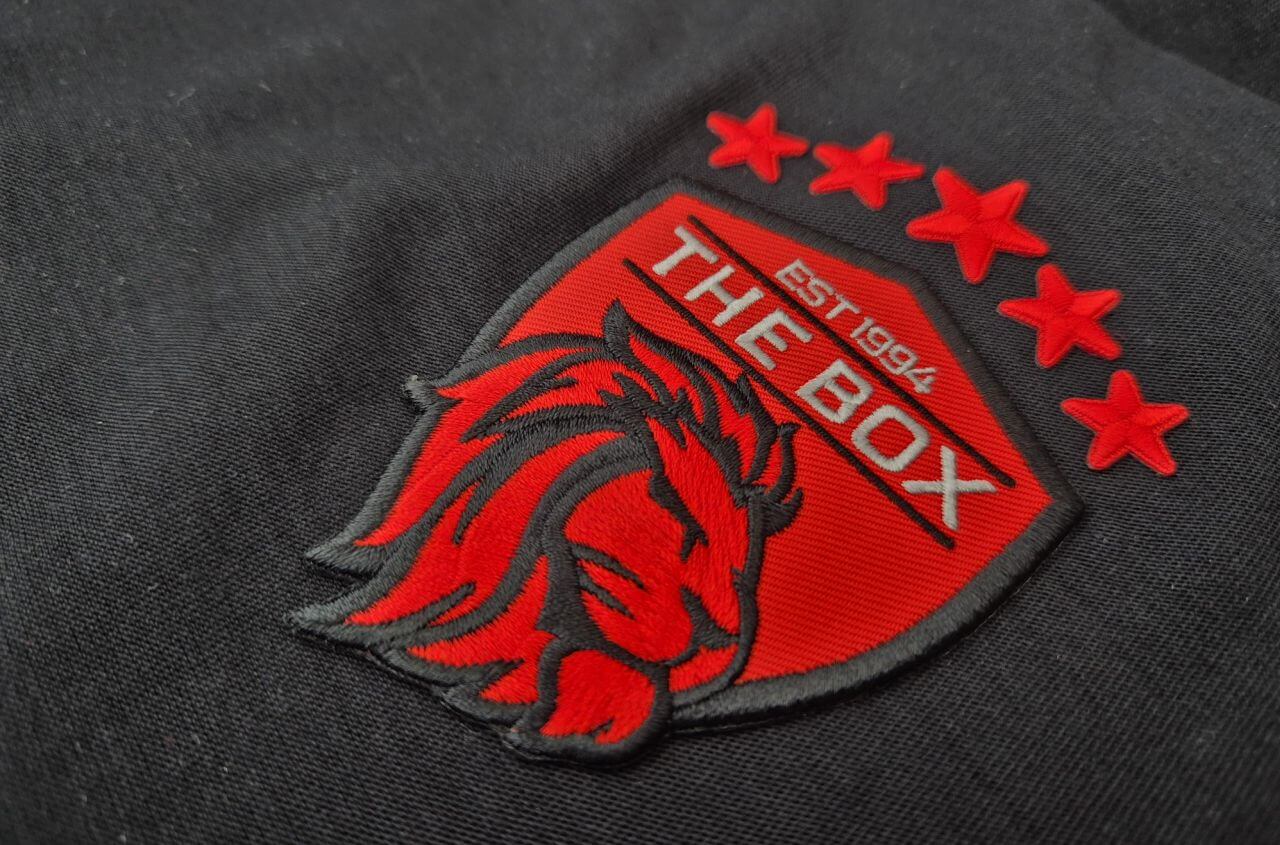
Positioning templates offer several advantages, especially for designs with multiple standalone elements.
These include:
- clean positioning,
- consistent results,
- even spacing,
- and efficient application.
This becomes particularly important for larger production runs or recurring collections.
In addition, embroidery-style heat transfers keep the inside of the garment free from traditional stitching, which can be beneficial for sportswear and performance textiles.
FAQ: Standalone elements in embroidery-style heat transfers

Do the standalone elements stay in position during application? Yes. The elements are pre-positioned and held together securely by the positioning template during application.
Is the white template part of the final design? No. The white areas are only used for positioning during application and are removed afterwards.
Can individual letters or small symbols also be created? Yes. In addition to stars, separate letters, numbers and other standalone elements can also be produced, depending on the design and size.
Does this only work with 3D EMBROIDERY heat transfers? No. Positioning templates can also be used with other heat transfer techniques, including 3D SILICONE and additional heat transfer techniques.
Do the elements need to be manually aligned? No. The positioning already takes place during production of the transfer. This keeps the complete design properly aligned during application.
Can these transfers also be applied to sportswear? Yes. Freestanding elements are commonly used in sportswear applications, especially for championship stars or multi-part logo designs.
Are larger gaps between elements possible? Yes. Positioning templates also allow elements with larger spacing to stay securely together and properly aligned during application.

Standalone embroidery-style heat transfers create new design possibilities
Individual stars, separate letters and freestanding elements have become a standard part of many modern designs.
With positioning templates, these elements can be prepared accurately and applied cleanly.
This opens up new possibilities for premium embroidery-style looks — from classic championship stars to creative fashion and merchandise applications.
Want to find out which technique works best for your design?
We’ll be happy to help you find the right solution for your project.


