A home match brings thousands of fans to the stadium. Many want to buy a shirt, a scarf or another piece of club merchandise before the game.
But there is often very little time.
Queues build up before kick-off. Everything needs to move quickly at half-time. And after the match, many fans just want to head home.
For football clubs, this means thousands of potential customers, but only a limited window to make a sale.
So how can clubs make better use of that time?
Not necessarily by adding more staff or opening more sales areas. But by making sure the fan shop, inventory and sales processes work better together.
This is where CONNECTED MERCHANDISE creates new opportunities.
Matchday: Lots of fans. Very little time.
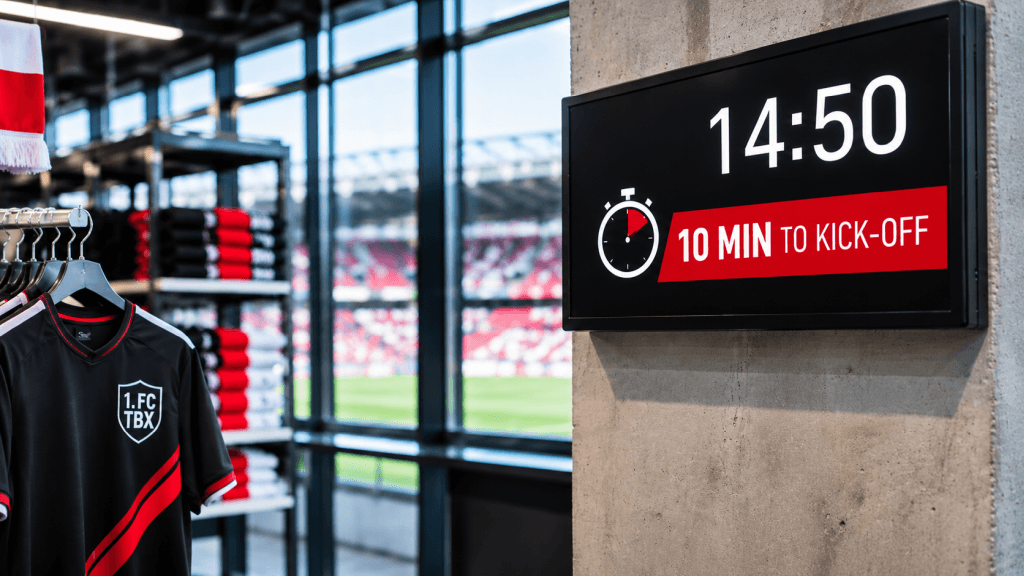
Imagine a typical home match.
An hour before kick-off, the stadium starts filling up. Fans meet friends, grab something to eat and make a quick stop at the club shop.
One fan spots the new home shirt.
He wants to buy it. But there is already a long queue at the checkout.
He checks the time.
Just 10 minutes until kick-off.
So he puts the shirt back.
Maybe he'll buy it online later. Maybe he'll come back after the match.
Or maybe he won't.
For the club, that's a missed sales opportunity.
Situations like this can happen many times during a single matchday. But long queues are only part of the problem.
Even when fans finally reach the checkout, they might discover that their size is no longer available. The shirt they want could still be in the warehouse or at another sales point, leaving the shop team to check stock availability while other customers continue waiting.
A faster checkout doesn't help much if the product isn't available.
That's why it's worth looking at the entire sales process.
From stock availability to replenishment and checkout
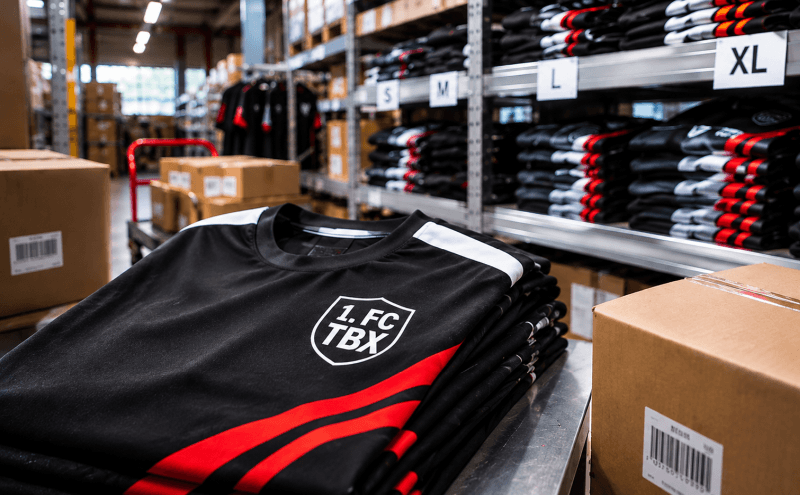
Size M is sold out. But is it really?
Let's say the new home shirt is selling particularly well.
Suddenly, size M is sold out in the club shop.
But there might still be more shirts in the main warehouse or at another sales point.
The problem? That information isn't always immediately available.
The team needs to make calls, compare stock figures or manually check where the remaining shirts are.
And while they're doing that, time is running out.
RFID can help teams record products faster and track stock movements more reliably.
This makes it easier to see where additional stock might be needed.
Because it's not just about how much merchandise a club has. It's also about knowing where it's needed.
Faster checkout. More fans served.
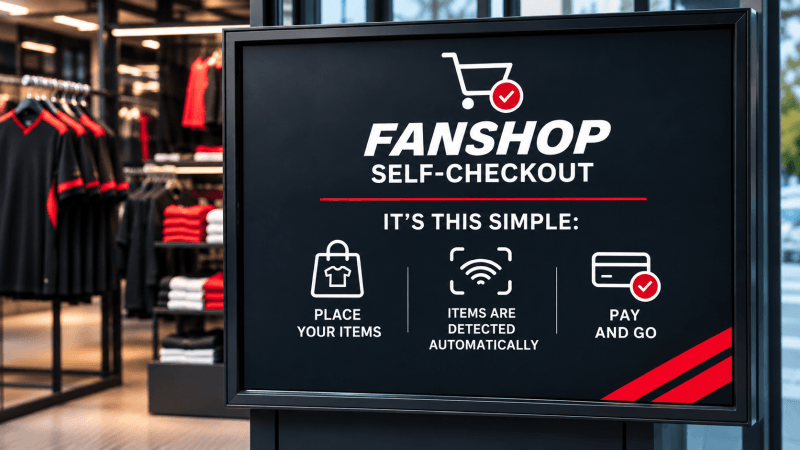
There are also ways to save time at the checkout.
One option is self-checkout systems, where fans can pay for their purchases themselves.
With RFID, several tagged products can be identified at the same time, without having to scan every shirt or scarf individually.
This can make checkout easier, reduce queues and take some pressure off the shop team.
But self-checkout is only one part of the solution.
What matters is finding a setup that works for the club shop and its existing processes.
We've explained how RFID self-checkout works and what technology is needed in our detailed article:
RFID INFAN SHOPS: HOW SELF-CHECKOUT STORES WORK FOR FOOTBALL CLUBS
What if everything worked better together?
Now imagine the same matchday again.
The new home shirt is selling particularly well.
- Stock levels in the club shop are updated regularly, helping the team spot which sizes are running low.
- If more shirts are available in the warehouse, the team can arrange replenishment in time.
- At the checkout, suitable self-service solutions help fans complete their purchases faster.
- And the club gets a better overview of which products are selling at which locations.
The result? Less unnecessary coordination. Better product availability. Simpler processes.
Of course, none of this happens automatically.
Products, systems and the partners involved need to be properly connected.
But that's exactly where the opportunity lies.
Don't replace everything. Connect what you already have.
The good news? Many clubs already have most of what they need.
They have a fan shop, a warehouse, logistics partners, checkout systems and inventory management software.
These don't necessarily need to be replaced.
Instead, it's about finding out where information is missing or where processes are taking up too much time.
- Maybe the fan shop needs a better connection to the warehouse.
- Maybe RFID could make tracking stock movements easier.
- Or perhaps existing checkout processes could be improved with self-service options.
Not every club needs the same solution.
And not every improvement requires a major project.
Sometimes, it's enough to start with one specific challenge.
How can dekoGraphics and r-pac help?
We don't just look at the jersey itself. We also look at the processes behind it.
Together with r-pac, we can help clubs better connect their products, partners and systems.
This can include RFID tags, suitable readers, printers, software and connections to existing systems.
Depending on the application, merchandise that has already been produced can also be equipped with RFID stickers.
And we work together with the club's existing partners.
Because the logistics partner knows its processes. The fan shop team knows its challenges. And the club knows what it wants to achieve.
Our role is to bring these requirements together and help develop solutions that work in practice.
That's our approach to CONNECTED MERCHANDISE.

Conclusion: Make more of every matchday.
A football club can't simply create more hours to sell merchandise on matchday.
But it can make better use of the time available.
By making products easier to find, simplifying sales processes and ensuring the right information reaches the right people.
Less waiting. Less searching. More opportunities to sell.
And that doesn't mean rebuilding the entire fan shop.
Often, improvements start with one simple question:
Where are we losing the most time today?
Where could your club make selling merchandise easier?
Maybe at the checkout. Maybe with stock availability. Or perhaps with replenishment between the warehouse and the fan shop.
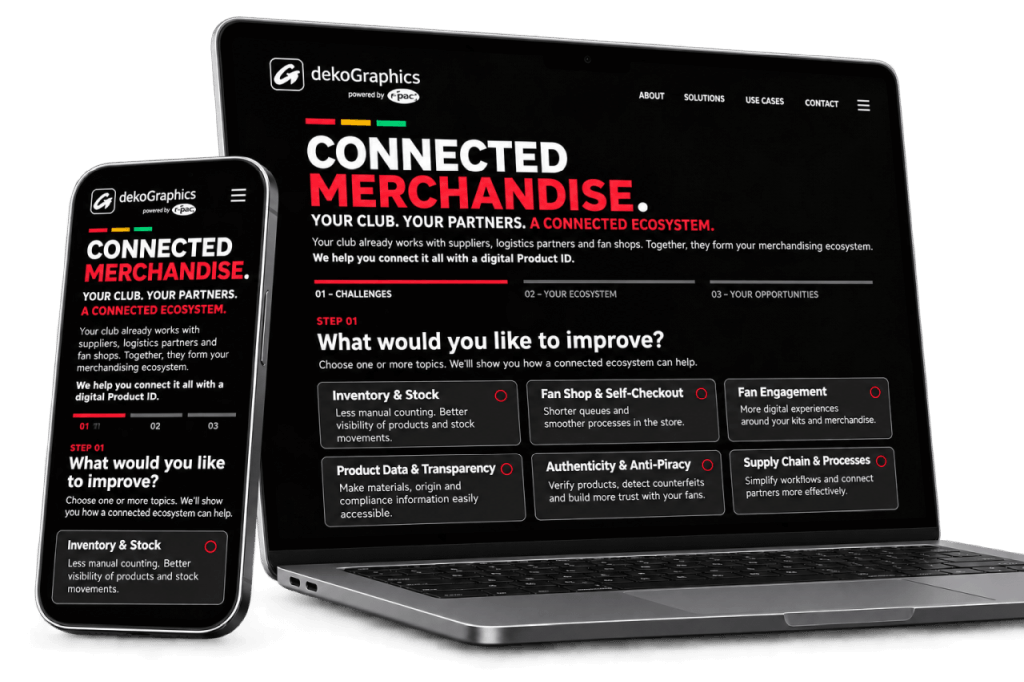
With our interactive CONNECTED MERCHANDISE EXPLORER, you can discover different ways to address these challenges.
Simply select the areas your club wants to improve and explore how connected products and systems could help.
Your merchandise can do more. Discover where to start.


