3D heat transfers are a big topic right now – especially 3D SILICONE. Many clubs are using this clean, modern look for their logos on the shirt, as it works perfectly with today’s performance materials.
At the same time, not every jersey follows that direction. In certain collections, clubs go for a more classic embroidered look.
So what’s behind these different choices?
And how do you decide which solution fits your jersey best?
3D doesn’t always mean the same thing
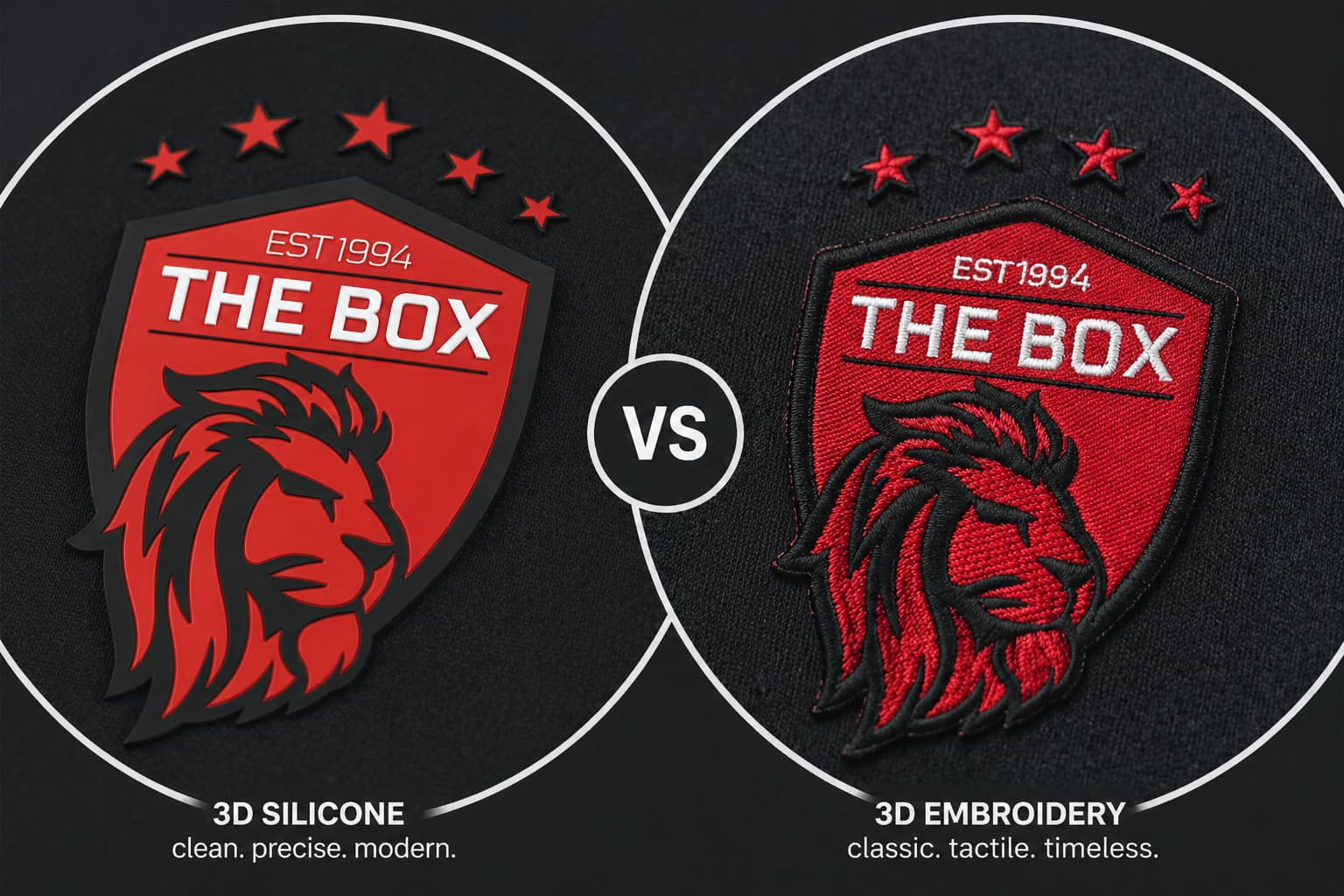
At first glance, 3D SILICONE and 3D EMBROIDERY have a lot in common. Both create a raised structure and technically fall into the same category of 3D heat transfers.
But on the shirt, they feel very different.
The current trend: 3D SILICONE
3D SILICONE represents a look you see quite often right now:
- clean lines
- sharp edges
- a precise, technical appearance
- a wide range of effects and structures
This works particularly well on modern jerseys and functional fabrics. That’s why it’s commonly used for club logos, neck labels or authentic labels.
Especially with more complex club crests, this level of precision becomes important. Even fine details or multi-layered designs can be reproduced clearly without losing definition.
If the goal is a modern, performance-driven design, 3D SILICONE is usually the natural choice.
Why embroidery-style logos are still relevant
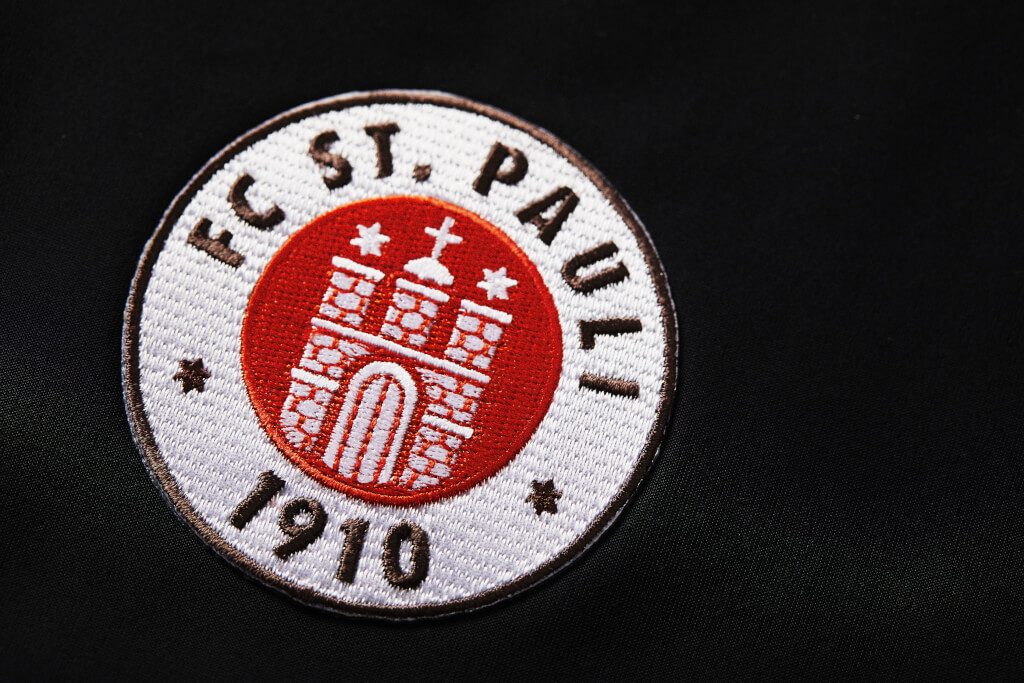
At the same time, there are many projects where a completely different direction is needed.
Typical examples include:
- retro jerseys
- anniversary collections
- heritage-driven designs
- concepts closely tied to a club’s history
Here, the focus isn’t on a modern look, but on creating a certain feeling.
An embroidered look supports exactly that. It feels more familiar, more tangible, and closer to traditional jerseys from previous eras.
The real difference is about perception
When you compare both approaches, it quickly becomes clear: this isn’t really about the technology – it’s about what the design communicates.
3D SILICONE is often chosen when:
- a modern, clean look is required
- the jersey should feel technical and precise
- new effects or materials are part of the concept
3D EMBROIDERY is a better fit when:
- tradition and heritage matter
- the design is intentionally more classic
- the logo should feel more emotional
Both are 3D – but they tell very different stories.
3D EMBROIDERY as a heat transfer

3D EMBROIDERY heat transfers recreate the look of traditional embroidery, but in a different way.
The designs are pre-produced and then applied to the garment using heat. This comes with a few practical advantages:
- no stitching on the inside
- more comfortable to wear, especially on lightweight or elastic fabrics
- consistent quality across larger quantities
- well suited for modern sportswear
Visually, the character remains the same – with texture, depth, and depending on the design, even shiny yarns or special finishes.
Embroidery transfer vs. direct embroidery: when each makes sense

Even though the focus here is on heat transfers, a quick comparison helps.
Direct embroidery is often used when:
- quantities are smaller
- designs are highly individual
- the focus is on a handcrafted feel
3D EMBROIDERY heat transfers are a better fit when:
- larger volumes are required
- consistent quality is important
- modern materials are used
- wearing comfort plays a role
Especially in sportswear, transfers are often the more practical solution without compromising the visual effect.
FAQ: Common questions about 3D SILICONE and 3D EMBROIDERY

Which option is better for my jersey? It mainly depends on the look you’re aiming for. 3D SILICONE works well for modern, technical designs. 3D EMBROIDERY is the better choice if you want a more classic or traditional appearance.
Is 3D EMBROIDERY just an alternative to 3D SILICONE? Not really. Both belong to the same category, but they’re used for different design directions. 3D SILICONE is typically associated with modern styles, while 3D EMBROIDERY is used for more classic, heritage-driven looks.
How close does an embroidery transfer get to real embroidery? In many cases, very close. The structure and depth can be replicated quite accurately. The main difference lies in the application: the transfer is applied to the fabric rather than stitched into it, which often improves comfort on modern materials.
Why do many clubs choose embroidery transfers over direct embroidery? In sportswear, practical factors play a big role. Embroidery transfers are more comfortable, work better on elastic fabrics, and allow for consistent results across larger quantities. For jerseys, that’s often the deciding factor.

Conclusion: It’s about choosing the right look
3D SILICONE is highly relevant right now and a strong option for many applications.
At the same time, there are projects where a classic embroidered look simply fits better.
In the end, it’s not about which technology is “better”.
What matters is how your jersey should feel – and what kind of story you want to tell.
Not sure which direction to take?
It often helps to look at different options in detail – or work with real samples.
With our free THE BOX, you can explore a range of solutions, from modern 3D SILICONE to classic embroidery-style finishes.
And if you like, we can take a look at your project together and help you find the right approach.


