When people first discover our portfolio, they usually ask the same question:
"You offer more than 150 different heat transfer technologies. How do you choose the right one?"
The answer often surprises them.
Although we have more than 150 technologies, we often recommend only two or three technology families for a jersey or merchandise collection.
Not because we have fewer options, but because the best results rarely come from using as many effects as possible.
They come from choosing technologies that work well together.
More choice doesn't mean more effects
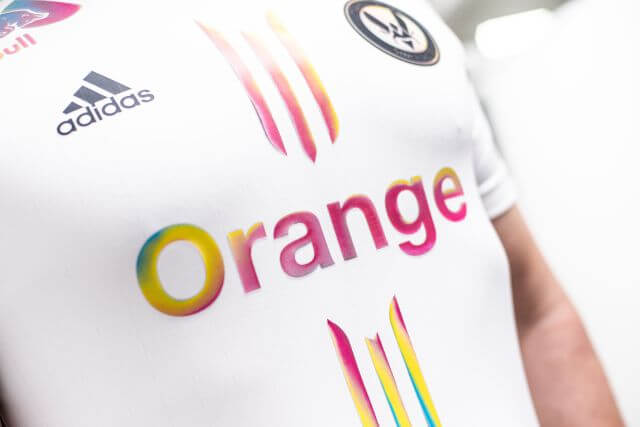
In theory, we could combine almost anything on a jersey.
Reflective effects, metallic finishes, lenticular technologies, NFC solutions, various 3D effects.
Technically, that's not a problem.
The more important question is:
Would it actually make the jersey better?
In many cases, no.
A great jersey isn't remembered because it uses the highest number of technologies.
It's remembered because every element feels like it belongs together.
The best jerseys feel consistent
If you look closely at successful jerseys, you'll often notice the same pattern.
- The club crest matches the authentic label.
- The authentic label matches the neck label.
- The materials, finishes and textures all complement each other.
Nothing feels out of place.
That's why we often recommend a small number of technology families and use them consistently across the entire jersey.
Take our 3D SILICONE family as an example.
👉 The club crest could be produced as 3D SILICONE X SATIN.
👉 The authentic label as 3D SILICONE MULTILEVEL CARVED.
👉 The neck label as 3D SILICONE SIDE COLOUR.
Each solution has its own purpose.
But because they belong to the same product family, they create one consistent look and feel.
The fabric sets the technical direction

Choosing the right technology doesn't start with the effect you want to create.
It starts with the fabric.
The material, stretch, coating, colour and intended use all determine which technologies are technically suitable.
Once that foundation is clear, the real design decisions begin.
- Which elements should stand out?
- Which ones should stay more subtle?
- Where does an extra detail add value?
- And which solutions work best together, both technically and visually?
The key question isn't simply which technology looks best.
It's choosing the one that fits the fabric, the application and the overall design.
Every collection needs its own approach
That doesn't mean we always recommend the same solutions.
- A match jersey has different goals than an anniversary jersey.
- A fashion collection is different from fanwear.
- And a limited edition can justify details that wouldn't make sense on an everyday product.
That's why we rarely start a project by asking:
Which technology should we use?
Instead, we start with a different question:
What should the finished product feel like?
Only then do we select the technologies that best support that goal.
So why do we offer more than 150 technologies?

If we often work with only a few technology families, it's a fair question:
Why do we need more than 150 options?
Because every project is different.
- A lightweight performance jersey has different requirements than a softshell jacket.
- A fashion collection often calls for a different finish than a match jersey.
- And different fabrics require different technical solutions.
Our broad portfolio isn't there so every product can include as many special effects as possible.
It's there so we can choose the solution that best fits the application.

Final thoughts
Having more options is always a good thing.
The challenge isn't using as many technologies as possible. The challenge is choosing the few that work best together.
That's why we often recommend just two or three technology families.
Not because we couldn't use more, but because, in most cases, it's the better solution.
If you're currently developing a new jersey, merchandise collection or another apparel branding project, we'd be happy to help you find the technologies that best fit your idea.


