A fan comes across the new home jersey of their favourite football club in an online shop.
The club crest looks right. The colours match. And the price is tempting.
But is the jersey actually genuine?
For fans, it's not always easy to tell.
And for football clubs, keeping track of where their products are being sold – and whether they come from authorised sources – can be just as challenging.
Because counterfeit jerseys aren't the only problem. There's another challenge: genuine products being sold outside authorised distribution channels.
How can clubs better protect their brand and gain more visibility?
With CONNECTED MERCHANDISE and digital Product IDs, clubs have new ways to identify products, verify their authenticity and better understand how they move through the supply chain.
The jersey looks genuine. But is it?
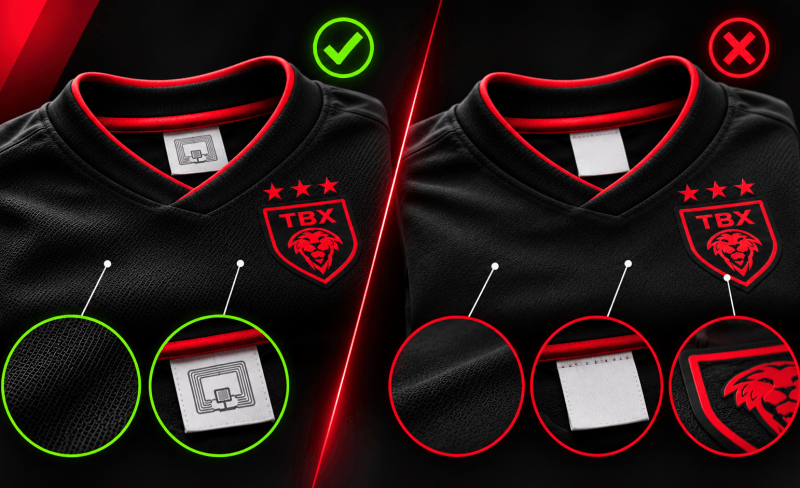
Imagine a fan ordering what they believe is an official club jersey.
At first glance, everything looks right.
The club crest is there. The kit supplier's branding is in place. Even the smallest details have been copied.
Only later does the fan notice that the fabric feels different or the quality doesn't match that of an original.
They might not even notice the difference at all.
The problem goes beyond the sale of a single jersey.
When fans have a bad experience with a product they believe is genuine, their trust in the club's brand can suffer too.
For clubs, it's about more than lost revenue.
It's about their identity, their products and the trust of the people who buy them.
Not every genuine jersey comes from an authorised retailer
There's another challenge: grey market products.
These are genuine products sold outside their intended or authorised distribution channels.
A jersey can be completely authentic, even if it wasn't purchased through the official club shop or an authorised retailer.
That makes things more complicated.
With counterfeit products, the question is: Is it genuine?
With grey market products, the question is: Where did it come from, and how did it end up in this sales channel?
These are two different problems.
And both show why clubs could benefit from better visibility across their supply and distribution chains.
What if every jersey had its own Product ID?
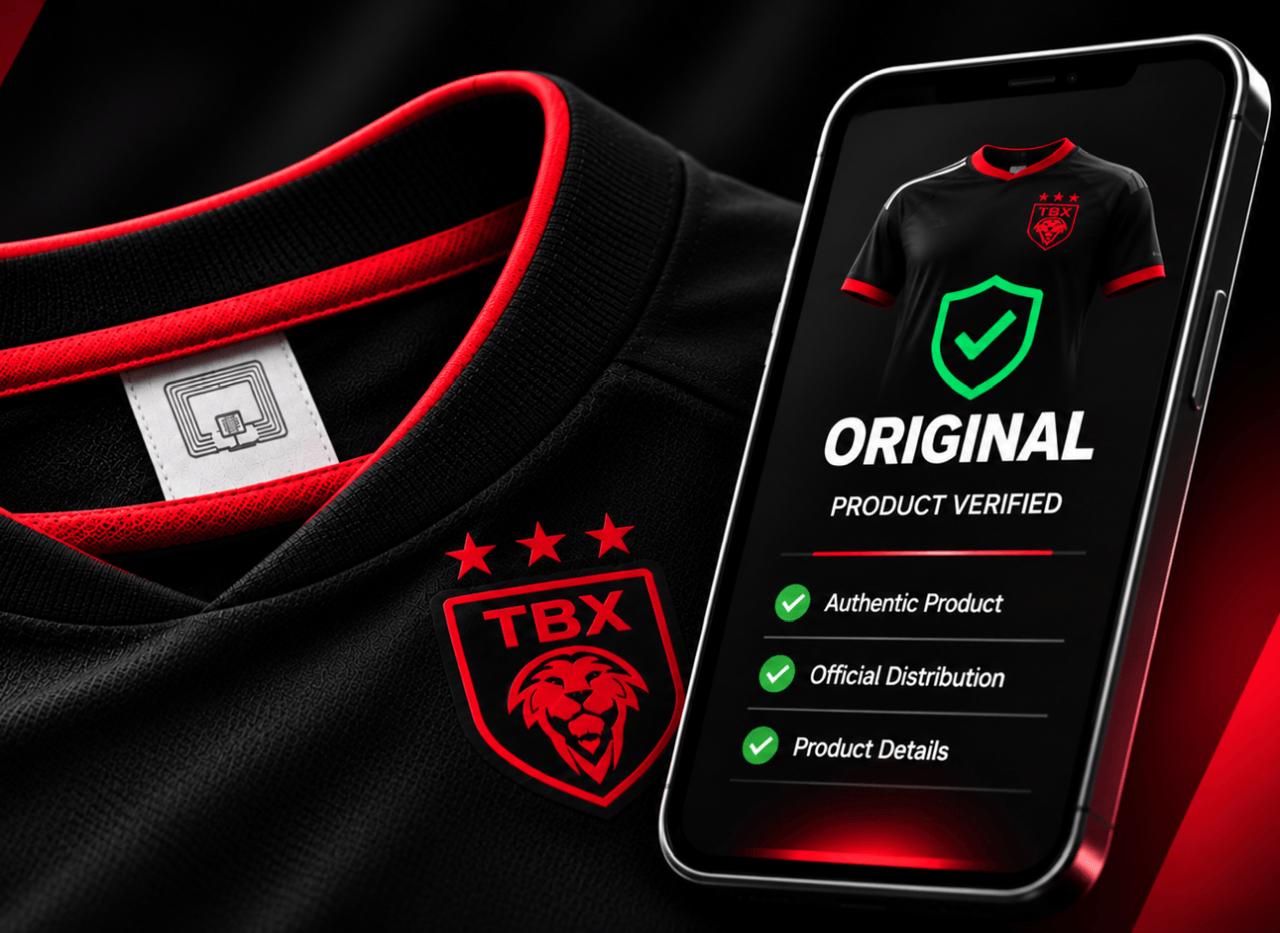
A club crest, product number or barcode can help identify a product.
But they don't always make it possible to distinguish one individual jersey from every other jersey of the same model.
That's where a digital Product ID comes in.
Imagine every jersey having its own digital identity.
This identity can be linked to the physical product through technologies such as QR codes, NFC or RFID.
This makes it possible to identify an individual jersey digitally and connect it to relevant product information.
For example:
- What product is it?
- When and where was it manufactured?
- Which stages of the supply chain has it passed through?
- What information is available about its origin?
- Can its authenticity be verified using the available data?
The information available depends on how the system is set up and what data the partners involved provide.
The key difference: With the right system in place, it's possible to identify not just the jersey model, but the individual product itself.
Can fans check whether their jersey is genuine?
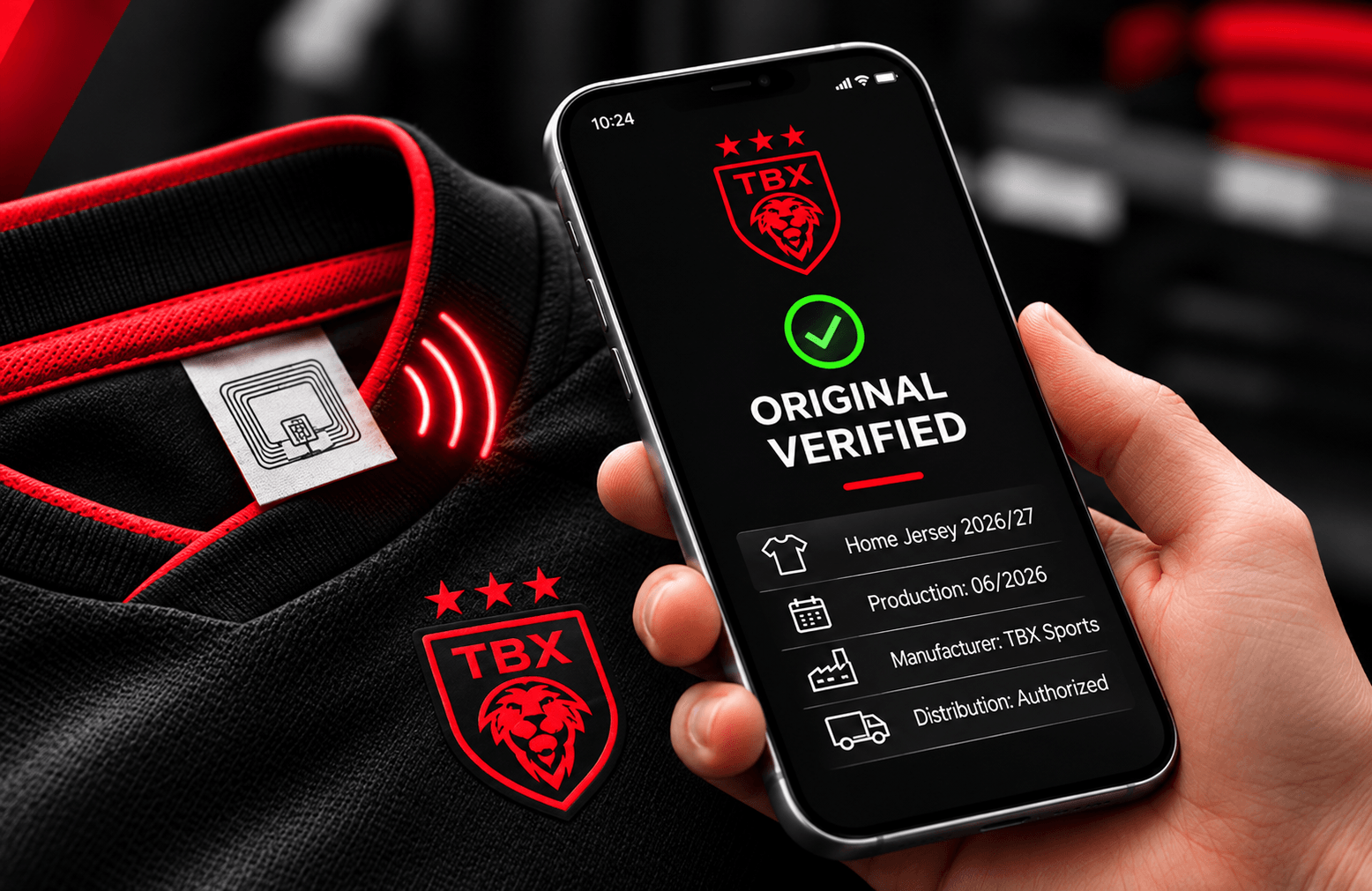
This is one of the most interesting possibilities.
Imagine a fan wants to check whether their new jersey is an official product.
They simply tap their smartphone against an NFC element in the jersey or scan a QR code.
A digital page opens, displaying information about the product.
If an authentication solution has been implemented, the fan may also be able to verify whether the jersey is genuine.
A simple scan can connect the physical jersey directly to its digital identity.
But there's an important distinction.
A standard QR code can be copied. And a visible product number alone isn't reliable proof of authenticity.
More reliable verification requires additional security measures, such as suitable secure NFC technology, protected product data and an appropriate verification process behind the scenes.
A QR code or NFC chip alone doesn't make a product secure. What matters is the system behind it.
And how can this help with grey market products?
Imagine a club discovers its jerseys being sold by an unauthorised retailer.
The products look genuine. They may even be completely authentic.
But where did they come from?
Were they originally produced for another market? Which partner supplied them? And at what point did they leave the intended distribution channel?
When products have individual digital identities and relevant movements are recorded, investigating these questions becomes easier.
For example, information from manufacturing, logistics and distribution can be connected.
Under the right conditions, this can help trace the journey of an individual product.
That doesn't mean every unauthorised resale will automatically be detected.
The relevant stages need to be recorded, and the data must be sufficiently complete.
But digital Product IDs can provide an important foundation for investigating unusual product movements and potential distribution issues.
The real value comes from connecting the information
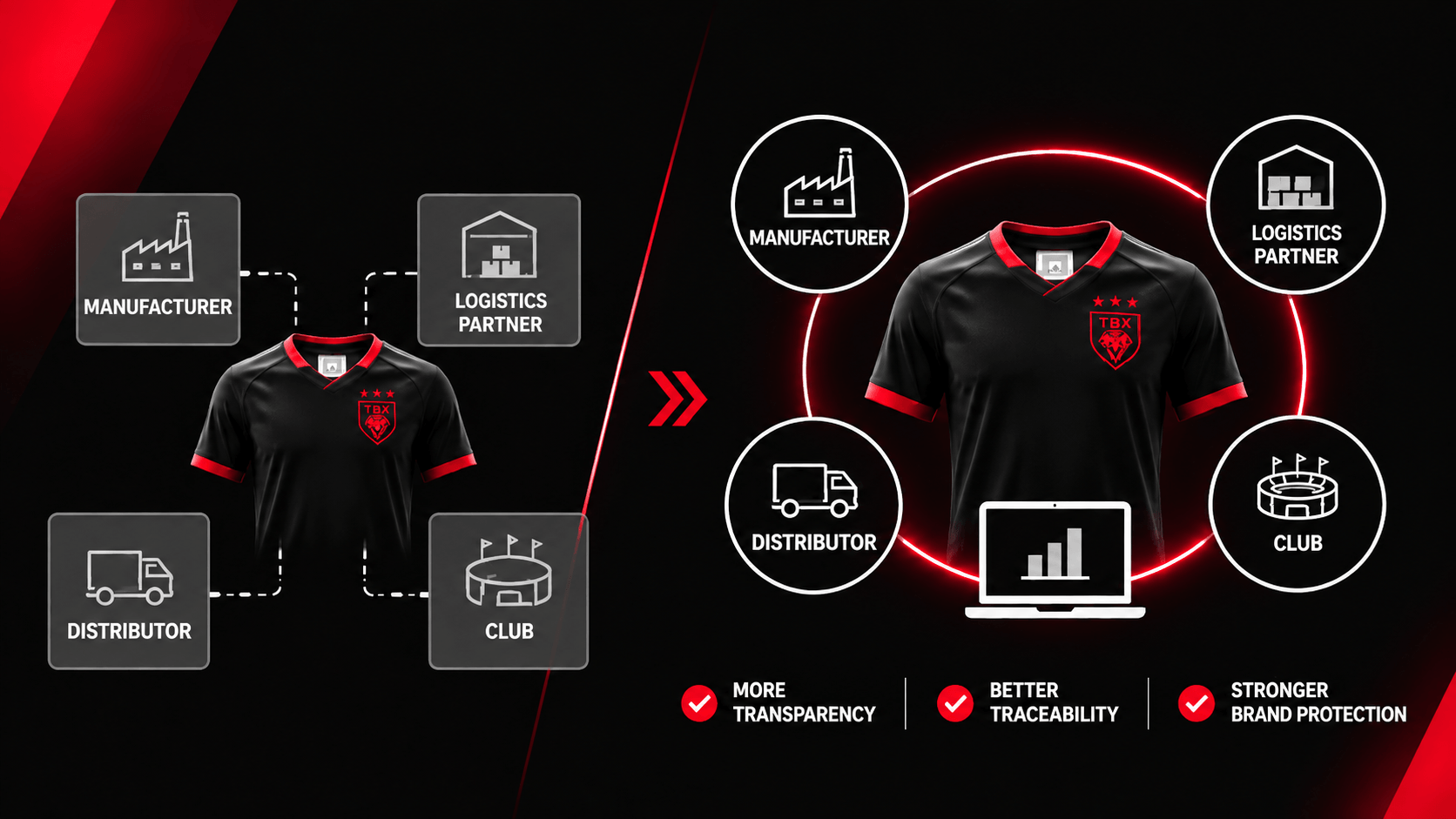
A Product ID alone doesn't solve the problem.
Imagine a manufacturer gives every jersey a digital identity.
But the logistics provider uses a different system. The distributor records product movements separately. And the club can't access the relevant information.
The products may have digital identities, but visibility remains limited.
The real value comes when the right information is connected.
This doesn't necessarily mean everyone needs to use the same software.
What matters is that the relevant data can be exchanged securely and effectively between systems.
That's how a simple product identifier can become the foundation for greater transparency, traceability and brand protection.
How can dekoGraphics and r-pac help?
We've been working with the identity of football jerseys for decades.
Together with r-pac, we can now extend that physical identity into the digital world.
This includes:
- QR codes, NFC and RFID to connect physical products with digital systems
- Integrating suitable identifiers into labels, hangtags and branding elements
- Digital Product IDs and the information linked to them
- Solutions for product traceability and authentication
- Connecting existing partners, processes and systems
This isn't about replacing the partners a club already works with.
Manufacturers, kit suppliers, logistics providers and retailers all continue to play important roles.
Our approach is to work with these partners to explore how products can be identified more effectively and how relevant information can be connected.
Because brand protection doesn't have to start when a counterfeit product is discovered.
It can begin much earlier – when a product receives its digital identity.
And what's in it for the fan?
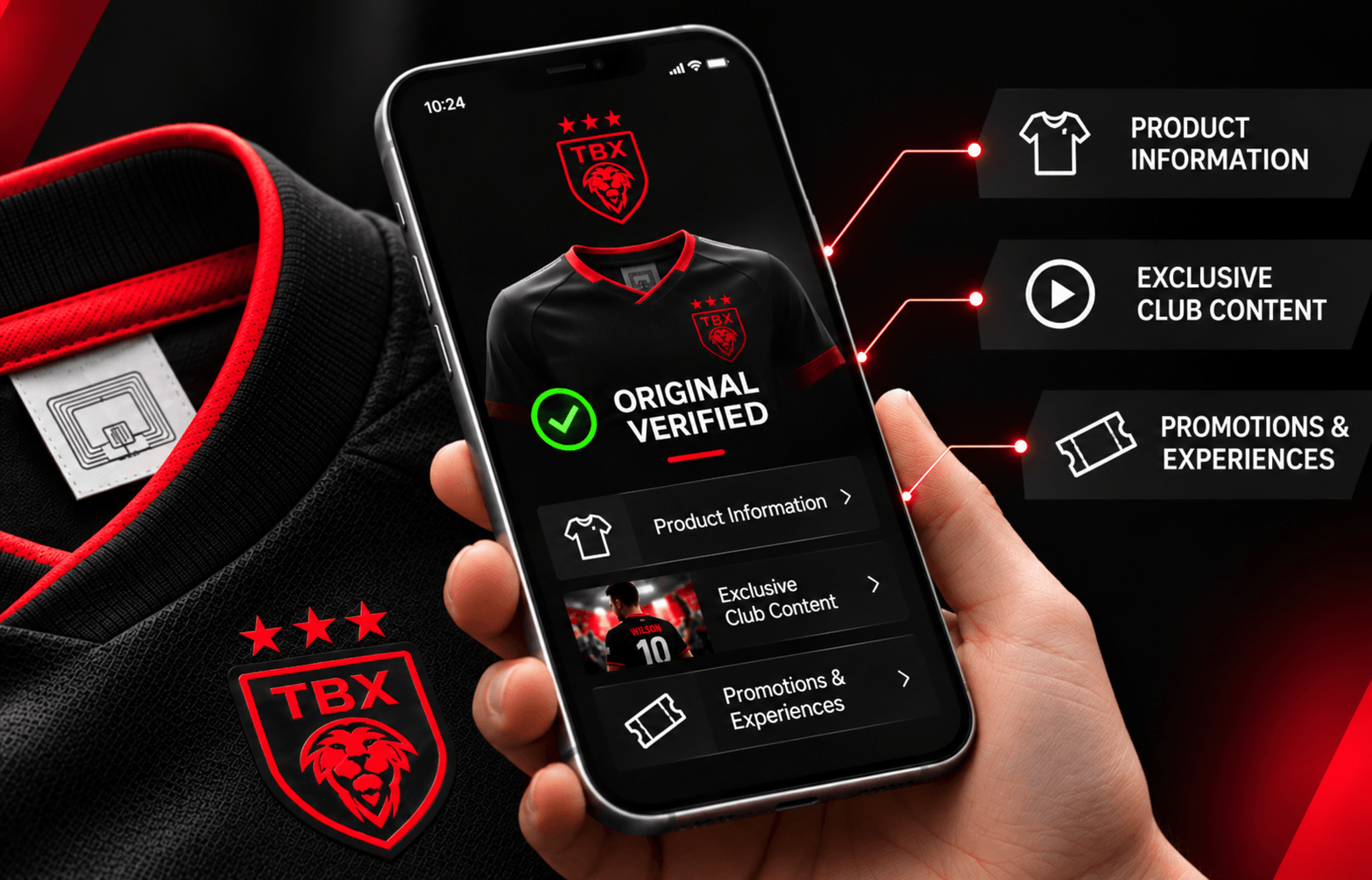
For fans, a digital Product ID can offer more than proof of authenticity.
The same jersey could also provide access to product information, exclusive club content or digital experiences.
A fan scans their jersey, checks the available product information and perhaps discovers exclusive content about their favourite player or a special jersey collection.
This creates opportunities to combine product authentication with fan engagement.
Of course, it depends on which features the club wants to offer.
But the idea is simple: A jersey can do more than represent a club's identity. It can also create a digital connection between the club and its fans.
Conclusion: A genuine jersey should be recognisable as genuine
Counterfeit jerseys and unauthorised distribution channels are two different challenges.
Both can make it harder for clubs to protect their products and their brand.
Digital Product IDs can help create greater transparency.
They make it possible to identify individual products, connect relevant information and, with suitable security solutions, verify authenticity.
And when relevant supply chain data is connected, clubs can gain better visibility into where their products come from and how they reach the market.
This won't prevent every counterfeit product. And it won't automatically make every distribution channel transparent.
But it gives clubs new ways to keep track of their products and better protect their brand.
How well does your club know the journey of its products?
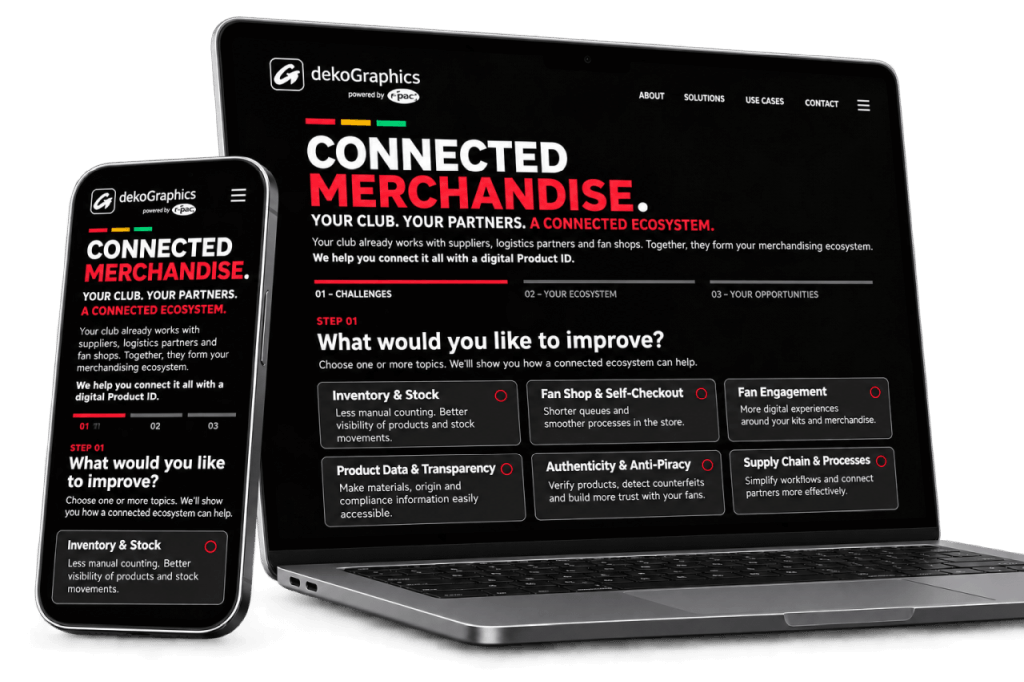
Do you know where your merchandise is manufactured, which partners handle it and what options are available to verify its authenticity?
With our interactive CONNECTED MERCHANDISE EXPLORER, you can discover how digital Product IDs, traceability and authentication can work together.
Simply choose the challenge your club is facing.
More transparency. Better brand protection. More possibilities for your products.