Many brands already know that products are becoming increasingly digital.
- The Digital Product Passport (DPP) is on the horizon.
- Consumers expect more transparency.
- Supply chains are becoming more connected.
And suddenly, terms like QR Codes, NFC and RFID seem to be everywhere.
The challenge?
These technologies are often discussed as if they were interchangeable, even though they solve very different problems.
As a result, many companies start looking at technologies before defining the actual challenge they want to solve.
In this article, you'll learn:
- how QR Codes, NFC and RFID work
- where each technology excels
- the advantages and limitations of each option
- and why the future often isn't about choosing one technology, but combining several.
The Short Answer: It's Not About the Best Technology
If you take one thing away from this article, let it be this:
QR Codes, NFC and RFID are not direct competitors.
They serve different purposes.
- QR Codes make information accessible.
- NFC connects products with smartphones.
- RFID makes products automatically identifiable throughout warehouses, stores and supply chains.
So the real question isn't: "Which technology is best?"
The better question is: "What problem are you trying to solve?"
If You Want to Share Product Information: QR Codes

Imagine a customer buys a football shirt and wants to know more about it.
- Where was it produced?
- What materials were used?
- How should it be cared for?
Or perhaps they want to access information stored within a Digital Product Passport.
For these use cases, a QR Code is often the simplest solution.
The user scans the code with their smartphone camera and is directed to a webpage, database or digital experience.
Typical QR Code Applications:
- Digital Product Passports (DPP)
- Care instructions
- Product information
- Sustainability information
- User manuals
- Landing pages
- Marketing campaigns
Why Brands Like QR Codes
QR Codes are affordable, easy to implement and supported by virtually every smartphone.
For many projects, that's all you need.
The Limitations of QR Codes
A QR Code must remain visible.
It also requires individual scanning.
For inventory management, logistics or warehouse operations, QR Codes are usually not the most efficient solution.
If You Want to Engage Consumers: NFC

Now let's look at a different scenario.
A fan purchases a limited-edition jersey.
They tap their smartphone against the club badge or an authenticity label.
Instantly, an exclusive video appears.
- Or a digital certificate of authenticity.
- Or access to a competition.
- Or behind-the-scenes content.
This is where NFC shines.
NFC stands for Near Field Communication and enables direct interaction between a physical product and a smartphone.
There is no need to scan a visible code. A simple tap is enough.
Typical NFC Applications:
- Fan engagement
- Product authentication
- Exclusive content
- Loyalty programmes
- Product registration
- Competitions and promotions
- Digital Product Passports
Why Brands Like NFC
NFC creates a seamless, premium user experience. The interaction feels natural and effortless.
For premium products, special editions and connected merchandise, that experience can significantly increase perceived value.
The Limitations of NFC
NFC does not solve logistics challenges. It won't help with inventory counts or warehouse visibility.
It also requires the user to actively interact with the product.
If You Need to Know Where Your Products Are: RFID
Now let's switch perspectives.
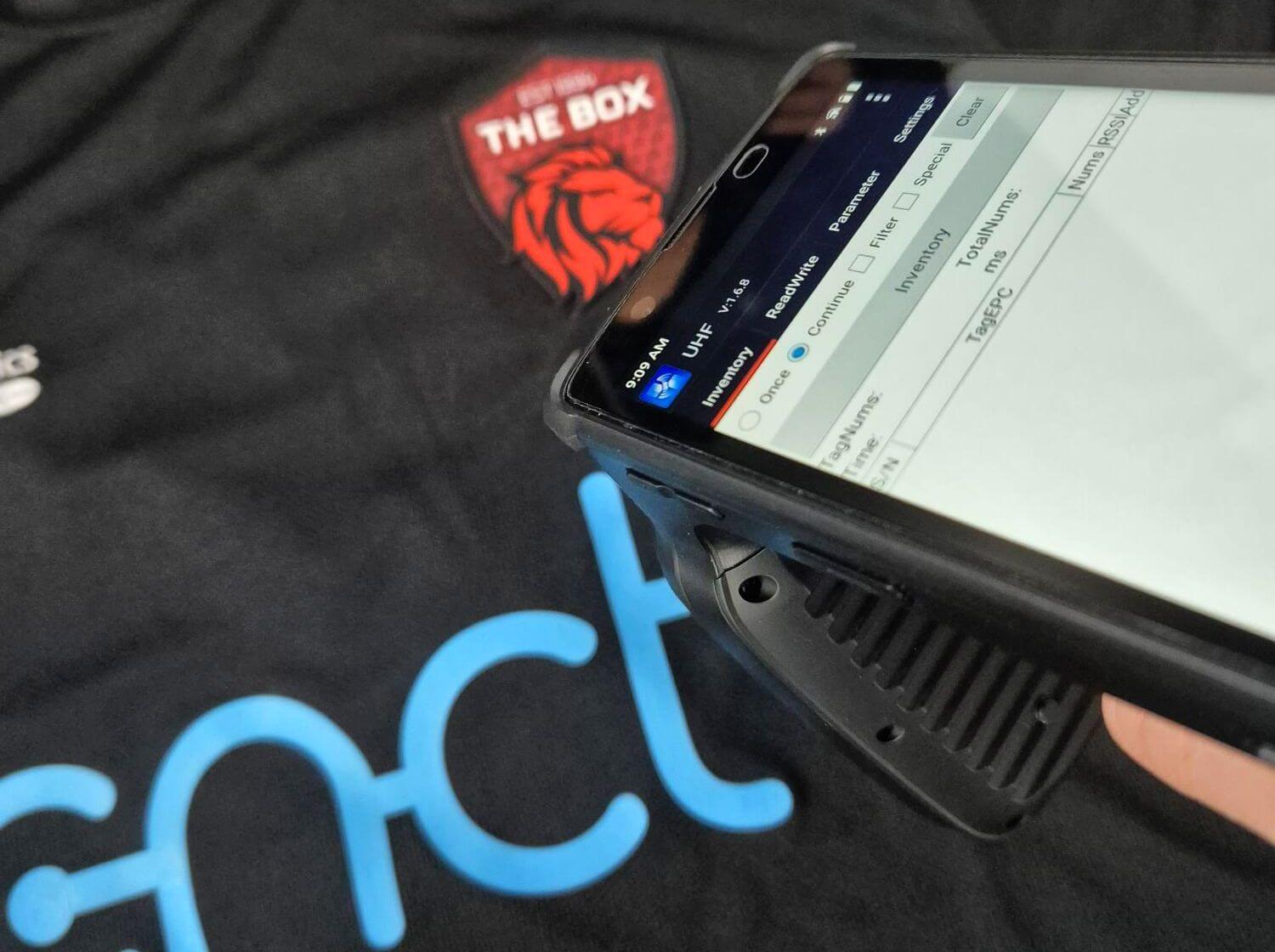
Instead of one jersey, imagine 5,000 products sitting in a warehouse.
The question is no longer: "What information should the customer see?"
The question becomes: "How can I identify and track all these products efficiently?"
That's exactly what RFID was designed for.
RFID stands for Radio Frequency Identification.
It allows products to be identified automatically using radio waves.
Products do not need to be visible. They do not need to be scanned individually. Multiple products can be identified simultaneously.
Typical RFID Applications:
- Inventory management
- Warehousing
- Supply chain tracking
- Self-checkout stores
- Retail operations
- Stock visibility
- Omnichannel fulfilment
Why Brands Like RFID
- RFID dramatically improves operational efficiency.
- Inventory counts become faster.
- Stock accuracy improves.
- Manual processes can be automated.
This is why RFID adoption continues to grow across fashion, sportswear, retail and logistics.
The Limitations of RFID
RFID requires readers and supporting infrastructure.
For simple product information or marketing campaigns, RFID alone is often more than is required.
Which Technology Is Best for the Digital Product Passport?
This is one of the most common questions we hear today.
The honest answer is: It depends.
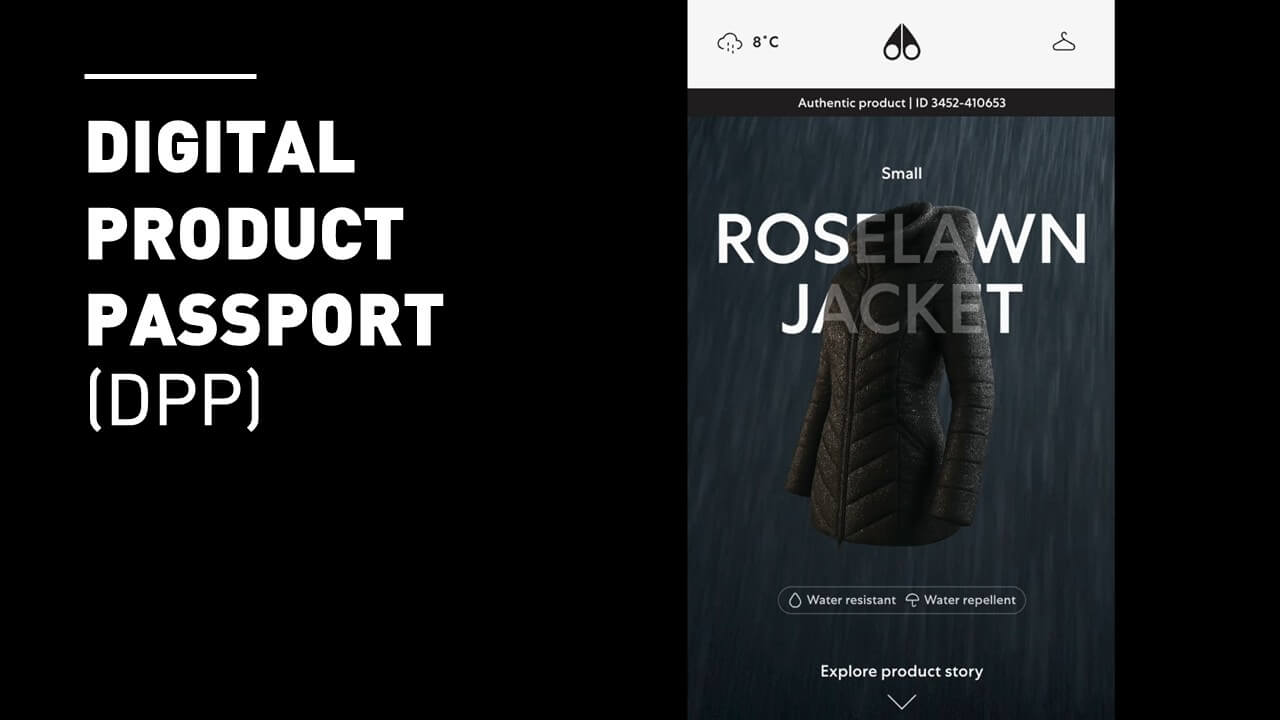
The Digital Product Passport does not mandate a specific technology. It simply requires that information is digitally accessible.
- If your goal is primarily to provide information, a QR Code may be sufficient.
- If you want to create a more premium user experience, NFC may be the better choice.
- If you also need automatic product identification throughout the supply chain, RFID becomes highly relevant.
The right solution depends entirely on your objectives.
Why the Future Is Not QR Code or NFC or RFID
Many companies search for one perfect technology.
In reality, we're increasingly seeing hybrid solutions.
The reason is simple: Each technology solves a different challenge.
- RFID helps identify products automatically throughout warehouses, retail stores and supply chains.
- NFC enables direct interaction with consumers via smartphones.
So why choose one when you can combine both?
A good example is r-pac's TwinTag technology.
TwinTag combines two technologies within a single tag:
- RAIN RFID for logistics, inventory management and supply chain visibility
- NFC for consumer engagement and smartphone interaction
This allows one product to:
- be identified automatically in a warehouse
- be tracked throughout the supply chain
- support self-checkout processes
- unlock digital experiences on smartphones
- provide access to Digital Product Passport information
The same product serves both operational and consumer-facing objectives.
A Practical Example: The Connected Jersey
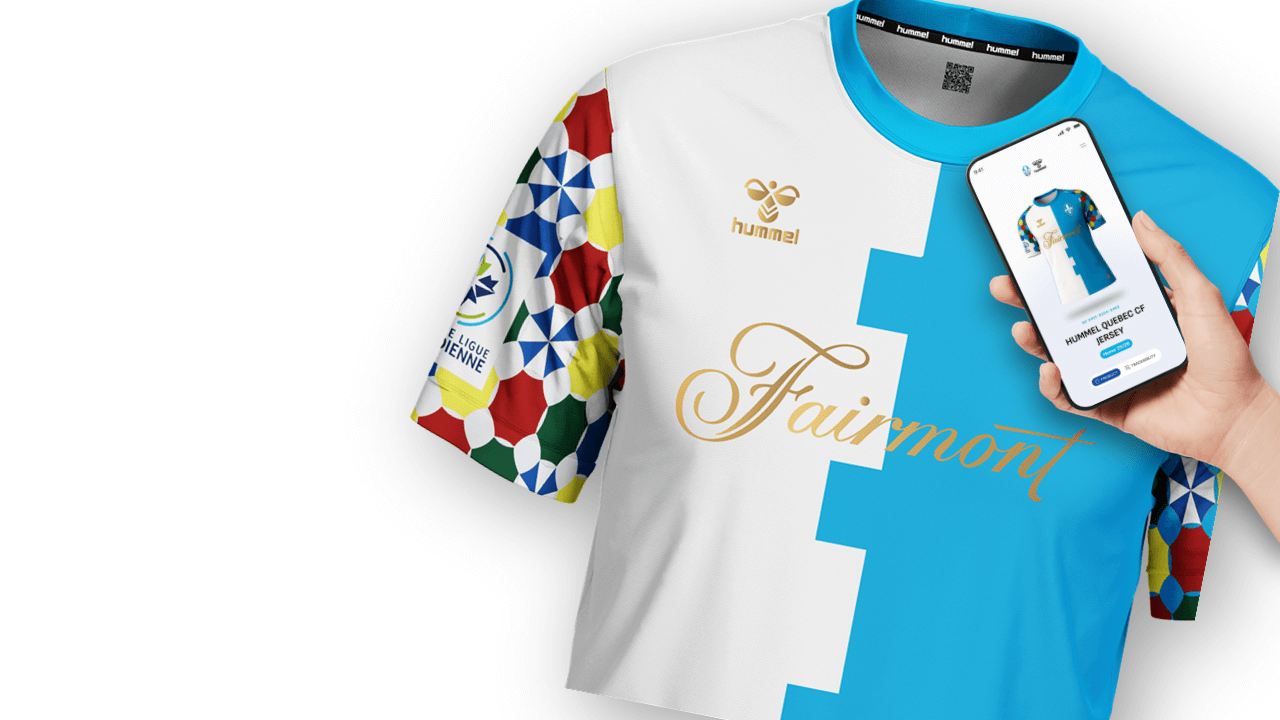
Let's imagine a modern limited-edition football shirt.
Behind the scenes, the club uses RFID to improve inventory management, increase stock accuracy and gain visibility across the supply chain.
The fan never notices any of this.
But when they tap their smartphone against the authenticity label or club badge, NFC unlocks:
- proof of authenticity
- exclusive videos
- player interviews
- competitions
- product information
- Digital Product Passport content
The same jersey now serves two completely different purposes.
- For the club, it becomes part of a smarter supply chain.
- For the fan, it becomes a digital touchpoint.
How to Choose the Right Technology
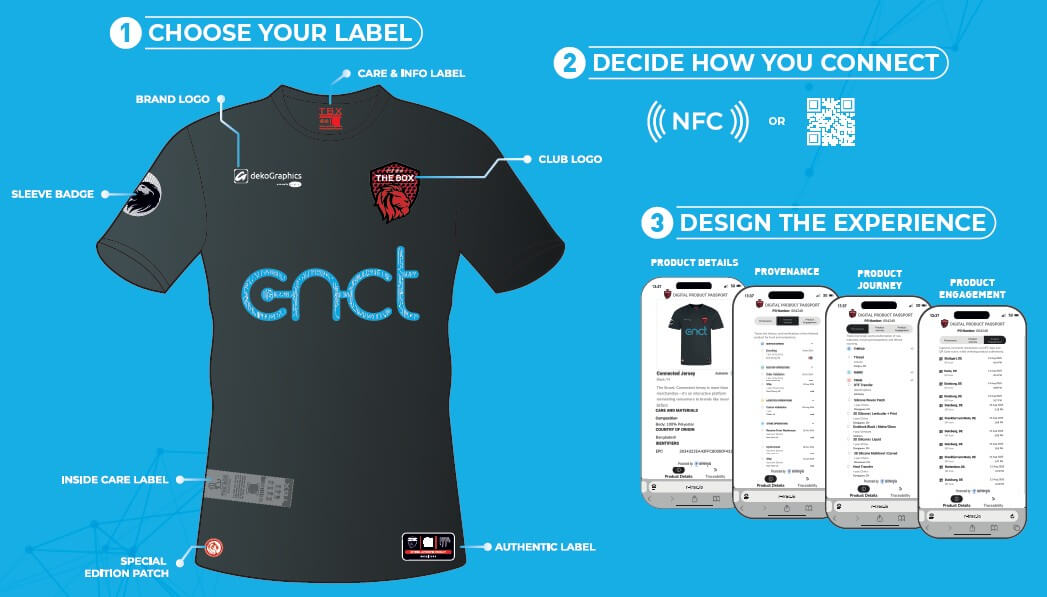
If your goal is to provide information:
If your goal is to engage fans or consumers:
If your goal is to improve inventory, logistics or supply chain visibility:
If you want to achieve several of these objectives simultaneously:
→ Consider combining technologies.

Final Thoughts: Start With the Problem, Not the Technology
QR Codes, NFC and RFID each play an important role in the future of connected products. But they are designed to solve different challenges.
- QR Codes make information accessible.
- NFC creates digital experiences.
- RFID delivers visibility and efficiency throughout the supply chain.
And solutions such as TwinTag demonstrate how these technologies increasingly work together rather than compete against one another.
Products are no longer just products. They are becoming identifiable. Connected. And increasingly intelligent.
The question is no longer whether products will become digital.
The question is how you want your products to participate in that future.


