7 everyday challenges that cost time, make sales more difficult and leave opportunities unused.
A jersey is produced, shipped, stored and sold.
A normal process, you might think.
But many different partners are involved along the way: manufacturers, logistics providers, fan shops, online retailers and different departments within the club.
And everyone has their own tasks, processes and systems.
It works. But not always as smoothly as it could.
Sometimes the same jerseys are counted several times. Sometimes a size is missing in the fan shop, even though it is still available in the warehouse. And sometimes fans spend so long waiting at the checkout that they decide to leave without buying anything.
There are also other challenges that might seem completely unrelated: counterfeit products, missing information about product origins or the opportunity to stay connected with fans after they buy a jersey.
Seven different problems. But often one common issue: Products, information and systems are not connected well enough.
Let's look at where football clubs lose time and opportunities in their daily merchandising operations – and what could help.
1. One jersey. Counted five times?
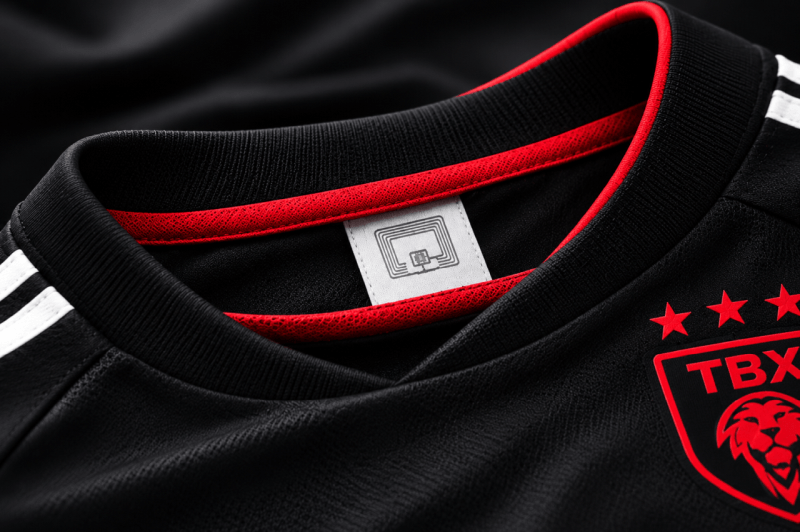
A jersey leaves the manufacturer.
It is counted, packed and shipped.
The logistics partner checks the delivery and records the products in its own system. The fan shop checks the quantities again. And when the next stocktake comes around, the counting starts all over again.
The same jerseys. The same work. Again and again.
Of course, many of these checks are necessary. Deliveries need to be correct, and stock levels need to be accurate.
But does every jersey really need to be counted manually each time?
What could help?
If the different systems can also share information, some of the repeated work can be reduced.
And this is not only possible with new collections. Depending on the application, existing products can also be equipped with RFID stickers.
Less manual counting. More time for other tasks.
👉 Read more: One Jersey. Counted Five Times? Why Clubs Lose Time on Stocktaking.
2. Size M sold out. But where are the other jerseys?
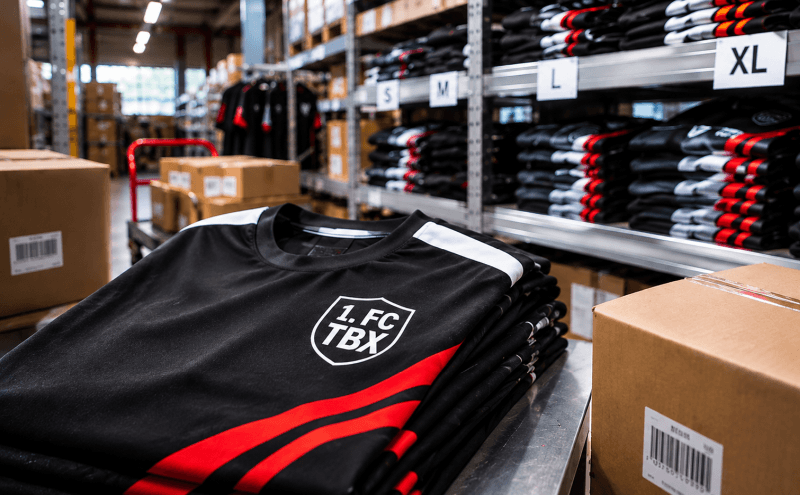
It's matchday. The new home jersey is selling well.
Suddenly, size M is sold out in the fan shop.
But is it really unavailable?
Maybe there are still 200 jerseys in the central warehouse. Maybe some are available at another sales point in the stadium.
The problem is that nobody knows exactly where they are.
So people start making calls, sending messages or checking stock manually.
And meanwhile, fans are waiting.
What could help?
When stock information from warehouses, fan shops and other sales locations is connected, it becomes easier to see which products are available and where.
RFID can help track product movements and make stock information more reliable.
With the right system connections, this information can also support restocking.
Because it's not only important how many jerseys a club has.
It's important that they are available where they are needed.
3. Waiting 20 minutes. Just to buy a jersey?
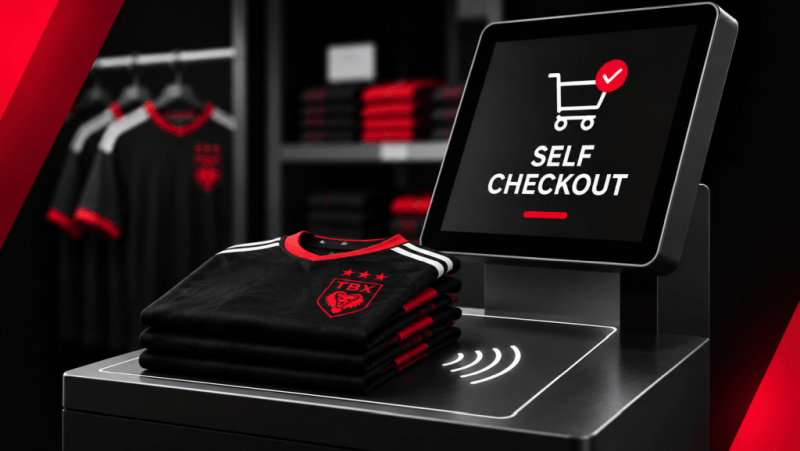
Sometimes a long queue is enough to lose a sale.
There are only ten minutes left before kick-off.
A fan wants to quickly buy the new home jersey.
He already has it in his hands.
But there are many other fans waiting at the checkout.
He looks at the time.
And puts the jersey back.
A sale that might never happen.
Especially on matchdays, clubs have only a limited amount of time to sell merchandise.
Long queues can quickly become a problem.
What could help?
Self-checkout systems can make the payment process easier and reduce the workload for staff.
With RFID, several tagged products can be identified at the same time without scanning each item individually.
Better stock availability and more efficient sales processes can also help make shopping easier for fans.
A club cannot make matchday longer. But it can make better use of the time available.
👉 Read more: Connected Merchandise: 90 Minutes of Football – How Much Time Is Left for Sales?
4. Original or fake?
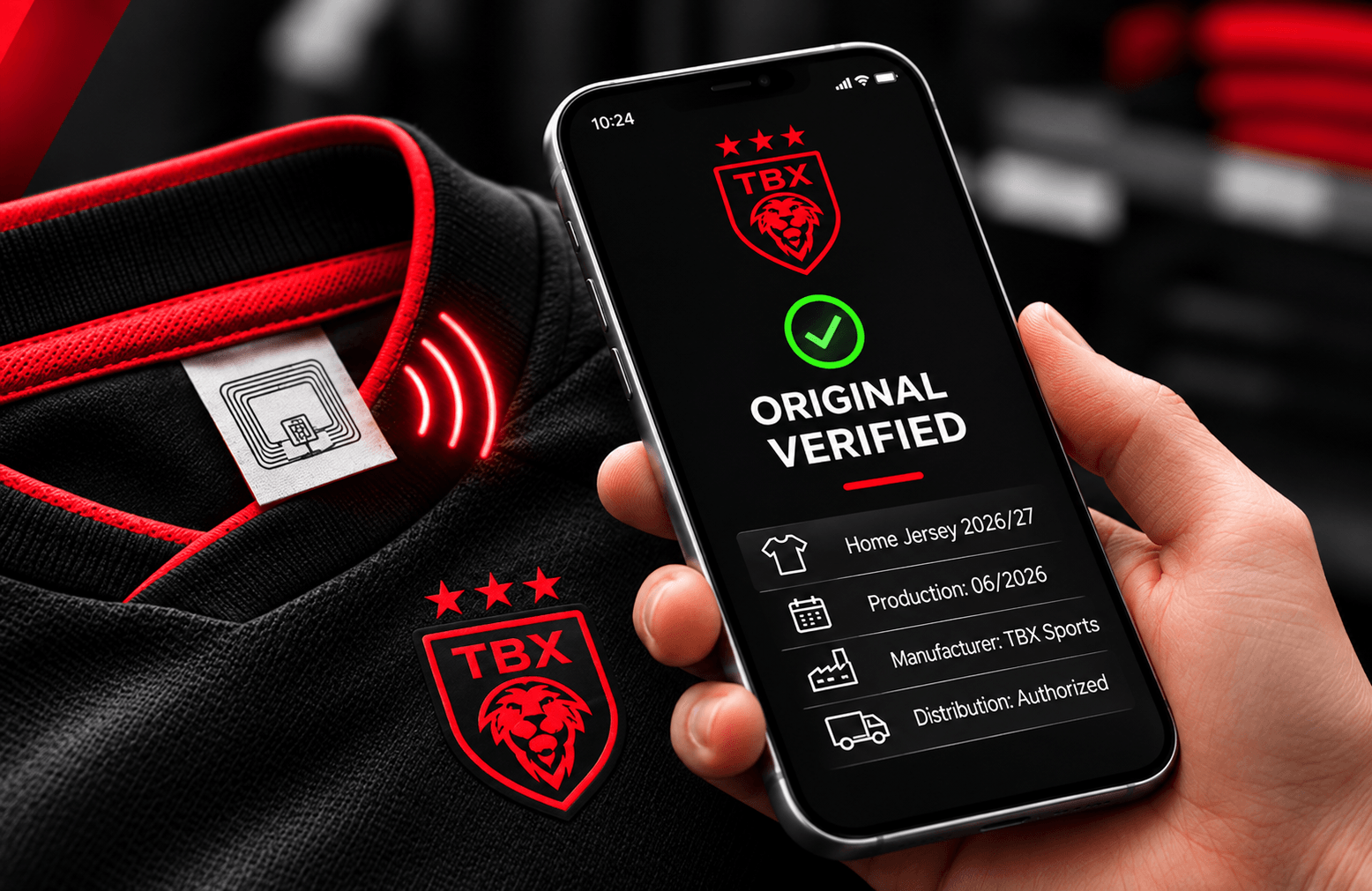
A fan discovers what looks like an original club jersey in an online shop.
The club crest looks correct. The colours match. Even the small details look convincing.
But is it really an original?
And even if it is genuine, was it sold through an authorised sales channel?
For clubs, these are two different challenges.
Counterfeit products can damage trust in the club's brand. Grey market products, on the other hand, are genuine products sold outside the intended or authorised distribution channels.
What could help?
Digital Product IDs can make individual products identifiable.
Combined with suitable security solutions, they can help verify whether a product is genuine.
If relevant product movements are also recorded, clubs may be able to better understand their distribution channels.
A Product ID alone cannot prevent counterfeiting. But it can provide an important foundation for more transparency and better brand protection.
Because a club's identity should not only be visible on a jersey. It should also be protected.
👉 Read more: Original or Fake? Can Your Club Tell the Difference?
5. Your fan buys a jersey. What happens next?
A fan buys the new home jersey.
He wears it at the stadium, during training or at home.
It will probably stay with him for many years.
But for the club, the direct connection to that product often ends at the checkout.
And that's where another opportunity begins.
What could help?
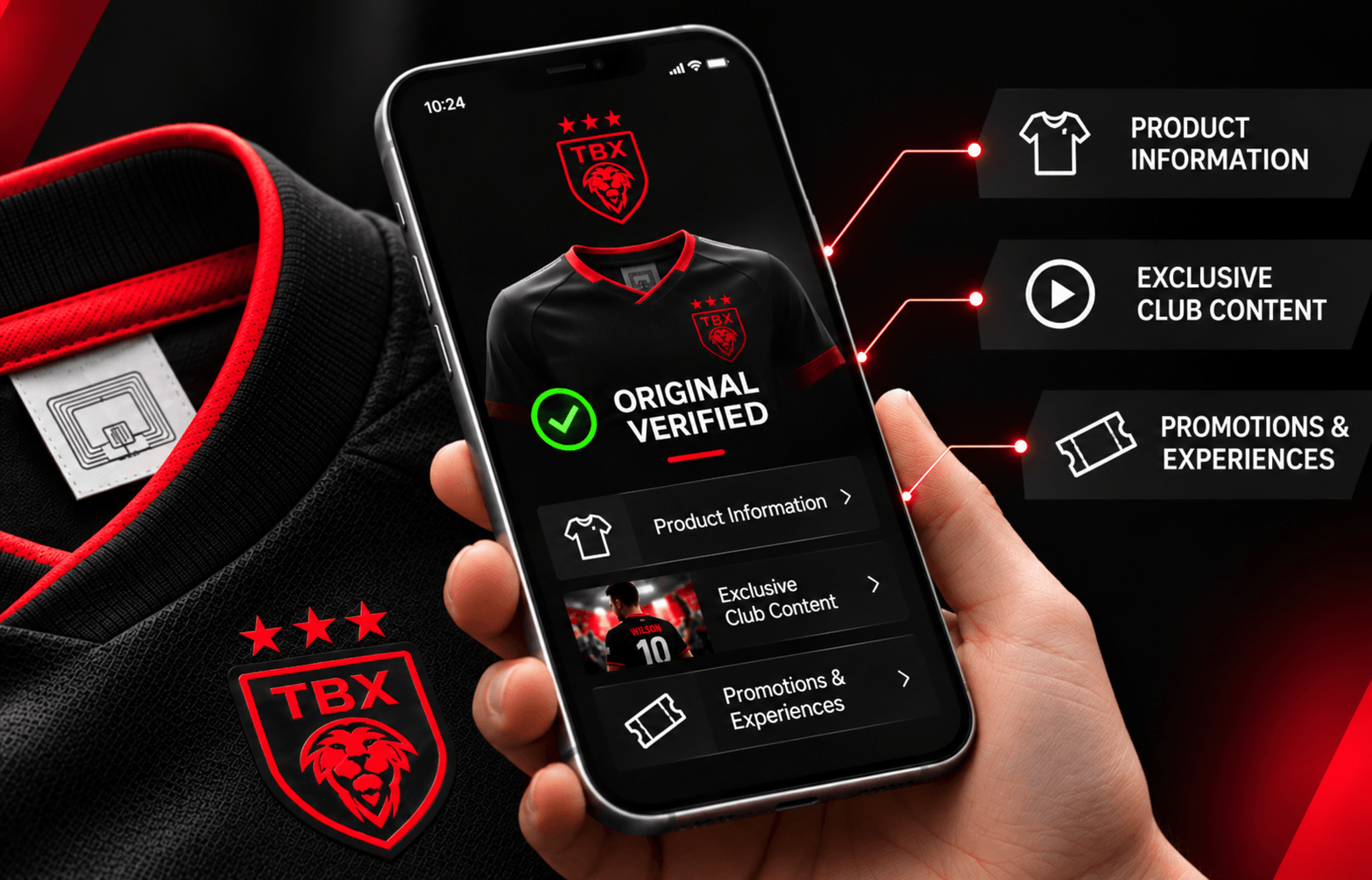
With NFC or QR codes, a jersey can become a connection to digital content.
A fan simply scans the product with a smartphone and can access, for example:
- Exclusive club content
- Special promotions and fan experiences
- Information about the jersey
- Digital offers related to players or special collections
The club decides which content to provide.
Of course, the jersey remains a jersey.
But it can also create a connection between the club and its fans long after the purchase.
👉 Read more: Connected Jersey: From a Jersey to a Digital Touchpoint.
6. Do you know where your jersey comes from?
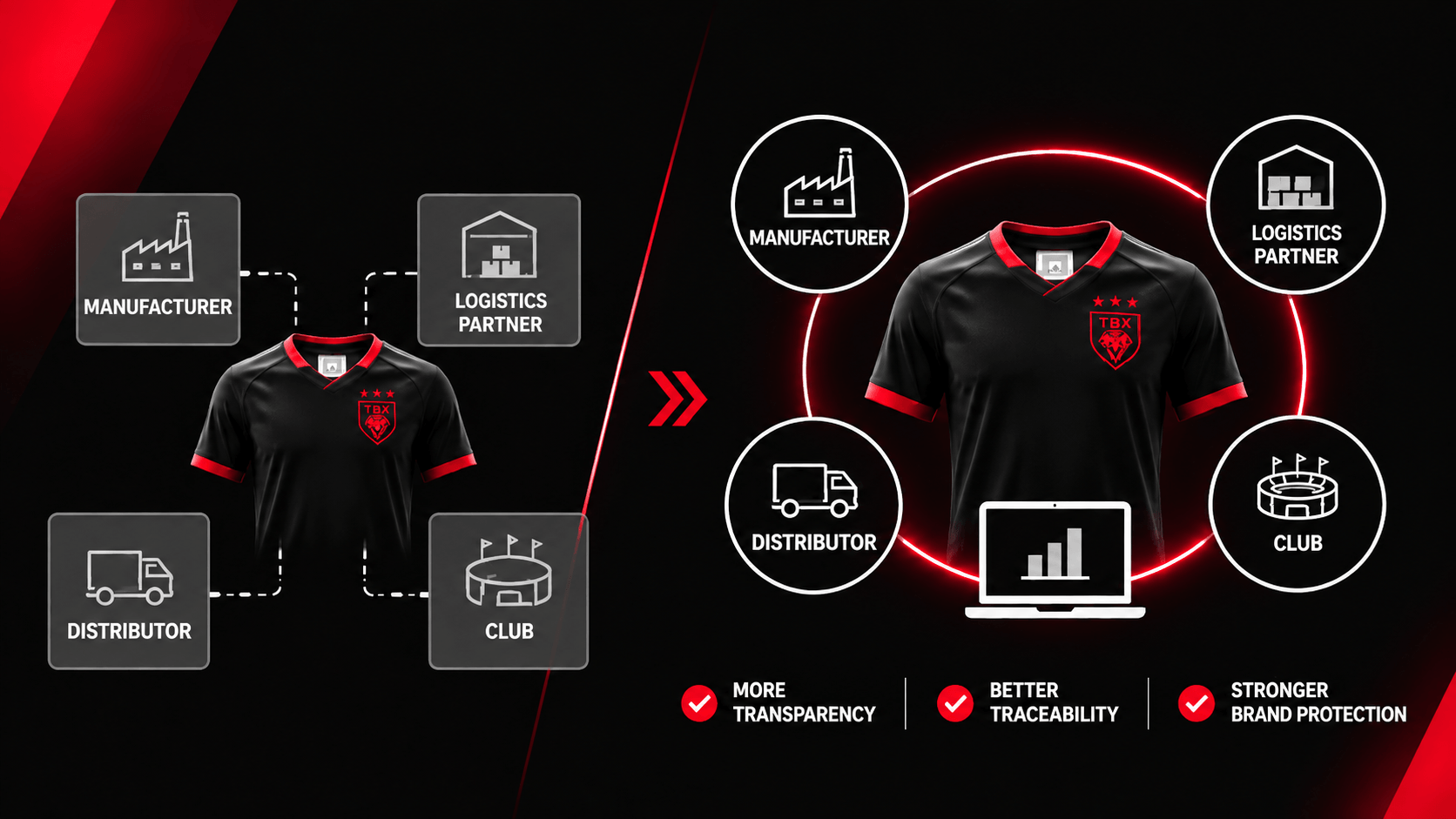
Where was the jersey produced? Which materials were used? And which companies were involved?
In many cases, this information already exists.
The manufacturer knows the production details. A supplier has information about the materials. The logistics partner records the transport.
But the information is often stored in different systems.
This makes it more difficult for clubs to track the journey of their products or share relevant information with fans.
And with growing expectations around transparency and product information, this is becoming more important.
What could help?
Digital Product IDs can help connect product information and make it accessible.
This could include information about materials, origins or production steps.
The Digital Product Passport (DPP) also follows the idea of making relevant product information available digitally. The exact requirements depend on the product category and applicable regulations.
So the real challenge is not always collecting more information.
It's making better use of the information that already exists.
7. Why do your partners need to keep exchanging information?
Maybe this is the challenge behind many of the other problems.
- The manufacturer uses one system.
- The logistics partner works with another.
- The fan shop has its own checkout system.
- The online shop manages orders separately.
And different departments within the club need information from all of them.
Everyone has their own tasks. Everyone has their own data.
But not everyone has the information they need when they need it.
So Excel files are shared, emails are sent, stock levels are checked and people ask each other for updates.
Not because the partners are doing a bad job.
But because their systems are often not connected well enough.
What could help?
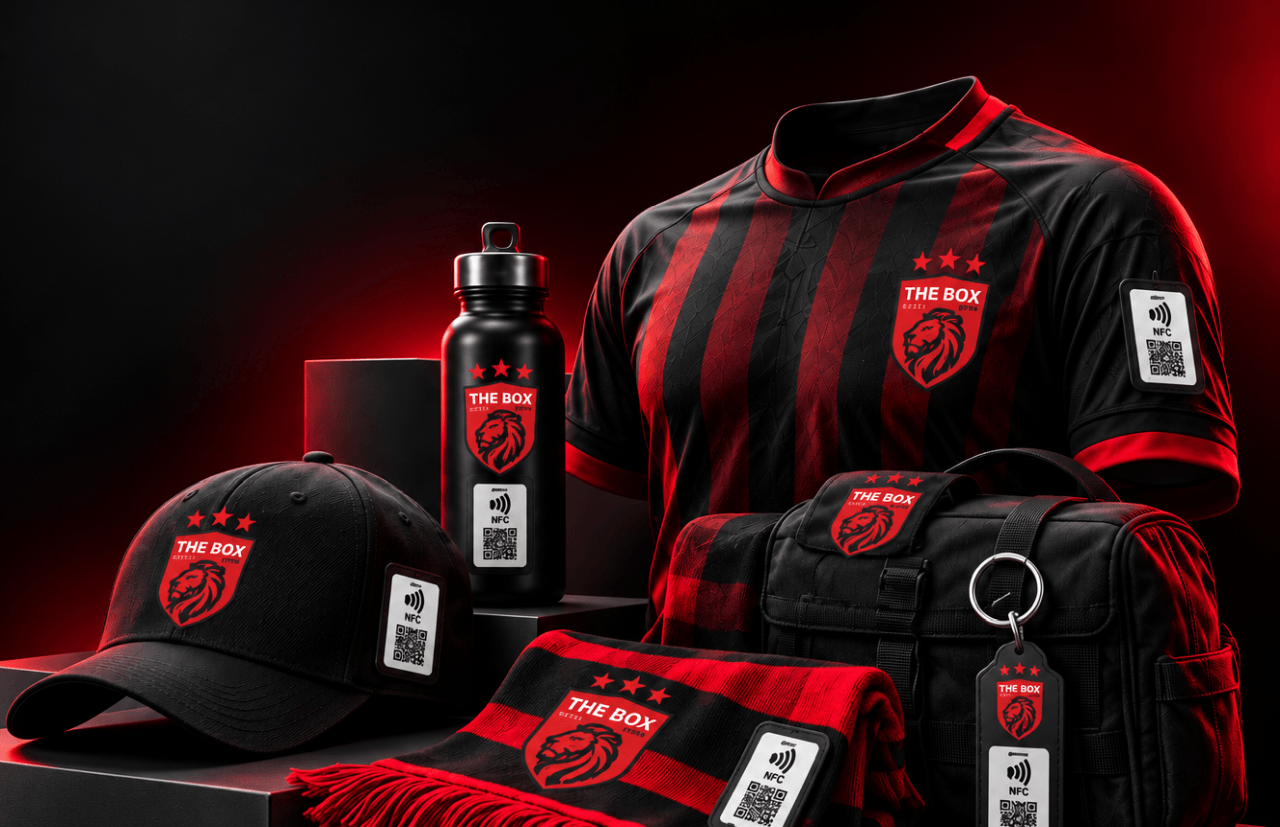
Products can receive a digital Product ID through RFID, NFC or QR codes.
This identity can connect the physical product with relevant digital information.
With suitable software and interfaces, existing systems can share information more easily.
The goal is not to move every partner onto one completely new system.
The goal is to make the right information available to the right people when they need it.
Seven problems. But where should your club start?
Maybe some of these situations sound familiar.
The challenges are different. Some involve logistics, others the fan shop, brand protection or communication with fans.
But many of them have something in common:
Products, information and systems are not connected well enough.
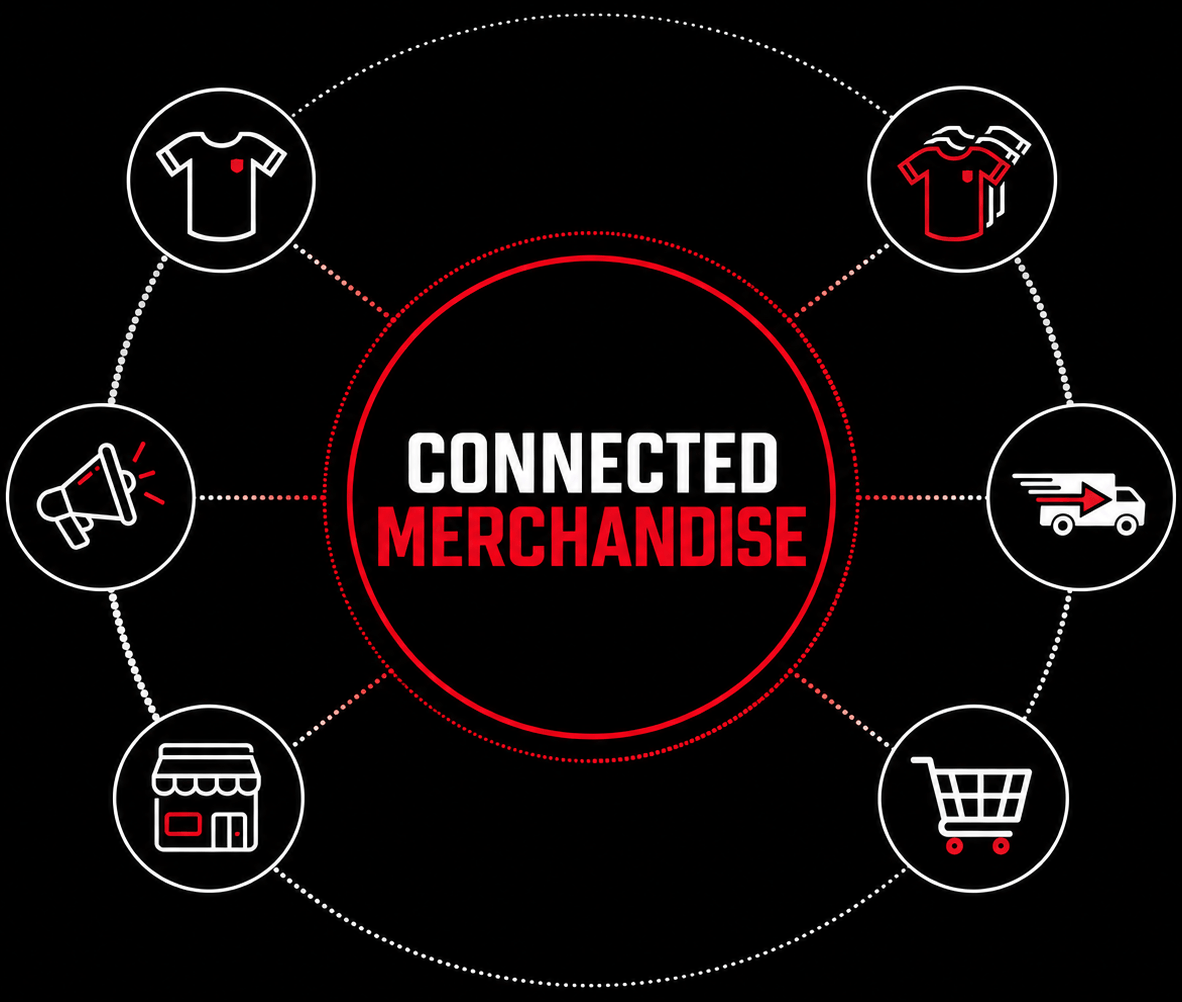
This is where CONNECTED MERCHANDISE comes in.
The idea is simple.
A physical product receives a digital Product ID, for example through RFID, NFC or a QR code.
This Product ID can connect the product with digital information, systems and processes.
Depending on the application, this creates different opportunities:
- Stocktaking & Inventory: Less manual counting and better stock visibility.
- Fan Shop & Self-Checkout: Easier processes and shorter queues.
- Brand Protection: Verify products and better understand distribution channels.
- Fan Engagement: Create new digital experiences for fans.
- Transparency & Product Data: Make information about origins and materials accessible.
- Partners & Processes: Share information more easily and improve collaboration.
But there is one important point.
A Product ID alone does not solve a problem.
What matters is how products, information, systems and partners are connected.
And what do dekoGraphics and r-pac have to do with this?
We have been working with football jerseys, club crests, names, numbers and labels for decades.
We know the products and many of the challenges involved in producing and decorating them.
Through our collaboration with r-pac, we can now offer much more.
From RFID and NFC solutions, QR codes and digital Product IDs to readers, printers and software.
But our goal is not to sell as much technology as possible.
We want to help clubs solve their real merchandising challenges.
And we believe this works best together with their existing partners.
The logistics partner knows its processes. The fan shop knows its daily challenges. And the club knows what it wants to achieve.
We want to bring these different needs together and develop solutions that make sense for everyone involved.
Not to replace existing partners.
But to become part of a better connected merchandising ecosystem.

Where should your club start?
Maybe you want to make stocktaking easier.
Maybe you need a better overview of your inventory.
Or maybe you want to improve the shopping experience and create new digital opportunities for your fans.
You don't need to change your entire merchandising operation to get started.
And the first step is not choosing RFID, NFC or a particular software solution.
The first step is asking a simple question:
Which problem do you want to solve?
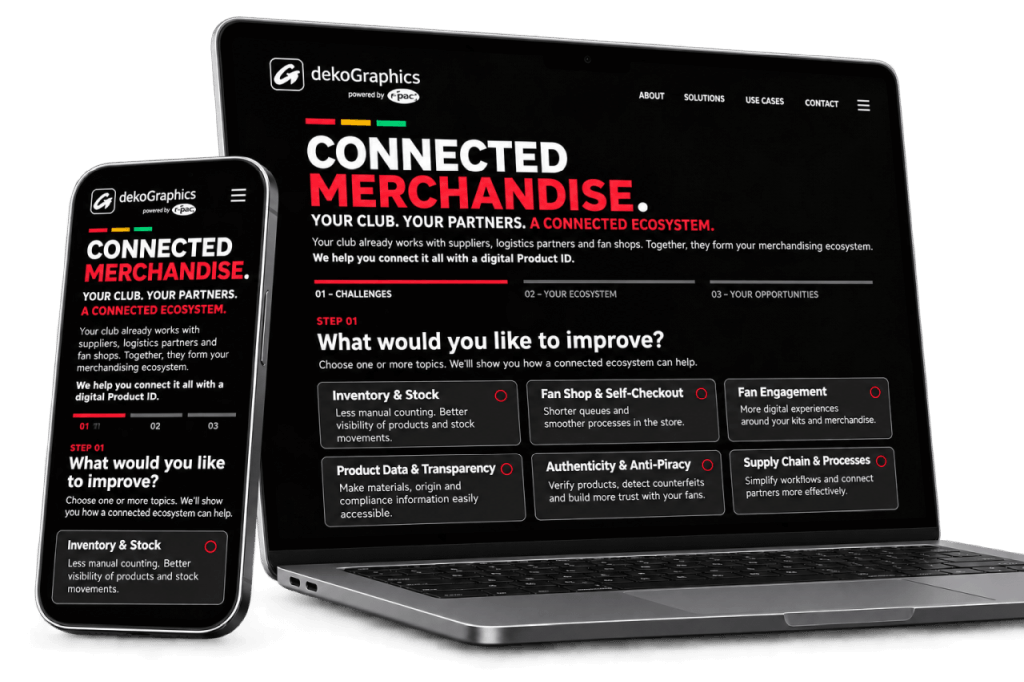
That's exactly why we created our interactive CONNECTED MERCHANDISE EXPLORER.
Simply select the challenge your club is facing.
The Explorer shows you what could be possible, which technologies could help and how the different solutions can work together.
No technical knowledge needed.
YOUR CLUB. YOUR CHALLENGES. YOUR POSSIBILITIES.
👉 EXPLORE CONNECTED MERCHANDISE


