When it comes to RFID and NFC, it's not just about which technology your club uses, but also where it's integrated into the jersey.
Your club has equipped its new jersey collection with RFID.
The technology helps speed up goods receiving, keep track of inventory and simplify processes in the club shop.
The RFID inlay is integrated into the jersey's hangtag.
But then something quite ordinary happens in the club shop.
A fan tries on a jersey. The hangtag gets caught on something and tears off.
Maybe a member of staff accidentally removes it. Or someone removes it on purpose.
The jersey is still there. The hangtag is gone.
And with it, potentially, the jersey's electronic identifier.
But what if the technology was integrated directly into the jersey?
A hangtag has a limited lifespan
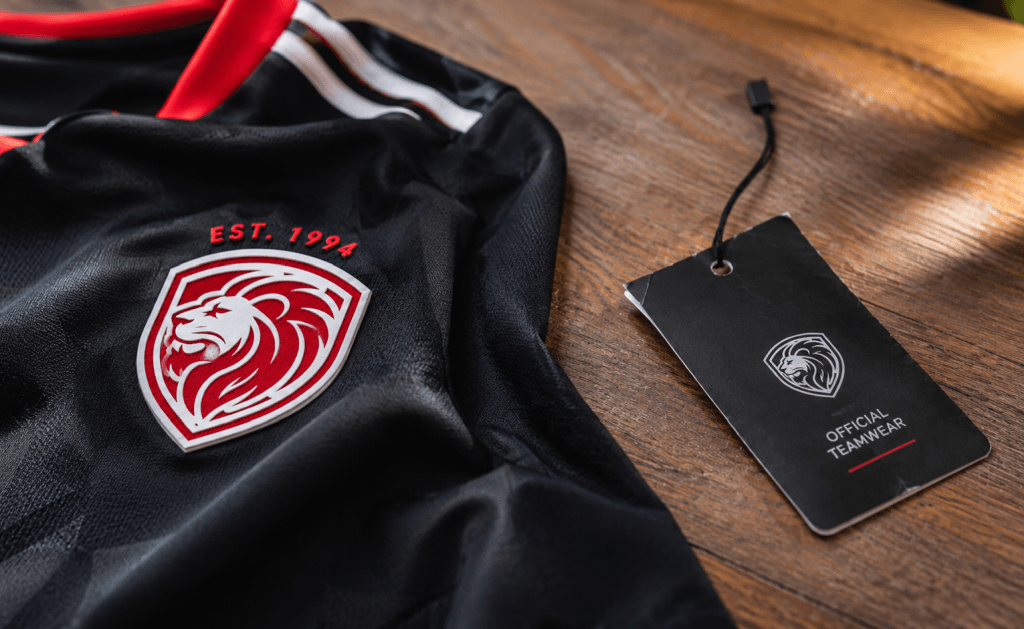
Hangtags serve many important purposes.
They provide product information, communicate the brand identity and can be equipped with RFID to support supply chain and retail operations.
For many applications, this is a very good solution.
However, a hangtag is designed to be removed at some point. Usually after purchase, but sometimes even before.
During transport, unpacking, restocking or when a fan tries on a jersey.
It doesn't even have to happen intentionally.
If the only RFID tag is integrated into the hangtag, the jersey can no longer be identified through that tag once it has been removed.
This can create additional work during the next stocktake or at a self-checkout station.
Yet a football jersey already has several elements that normally remain part of the product throughout its lifetime.
Why not use the club crest?
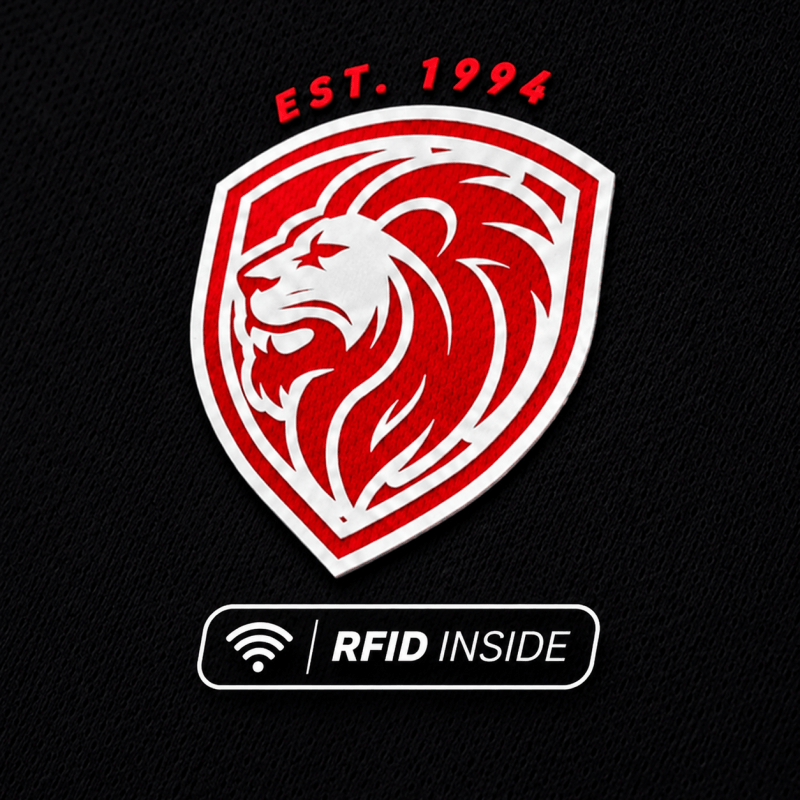
Every football jersey carries a club crest.
Many jerseys also feature an Authentic Label, often positioned near the bottom of the jersey.
Both elements are permanently attached to the product.
So why not use one of these elements to integrate the technology?
With specially developed heat transfers, an RFID inlay can be integrated directly into the club crest or Authentic Label.
For the fan, very little needs to change visually.
For the club, however, this can open up additional possibilities.
Even if the hangtag is lost or removed, the jersey can still be identified through its integrated RFID tag.
Could this also help prevent theft?
A hangtag is relatively easy to remove.
Removing a permanently applied club crest or Authentic Label without leaving visible damage to the product is much more difficult.
Of course, an RFID inlay inside a club crest doesn't automatically prevent theft.
It requires suitable readers, the right systems and effective processes in the club shop.
But the electronic identifier is no longer as easy to separate from the product.
And that can make a difference.
Why stop at RFID?
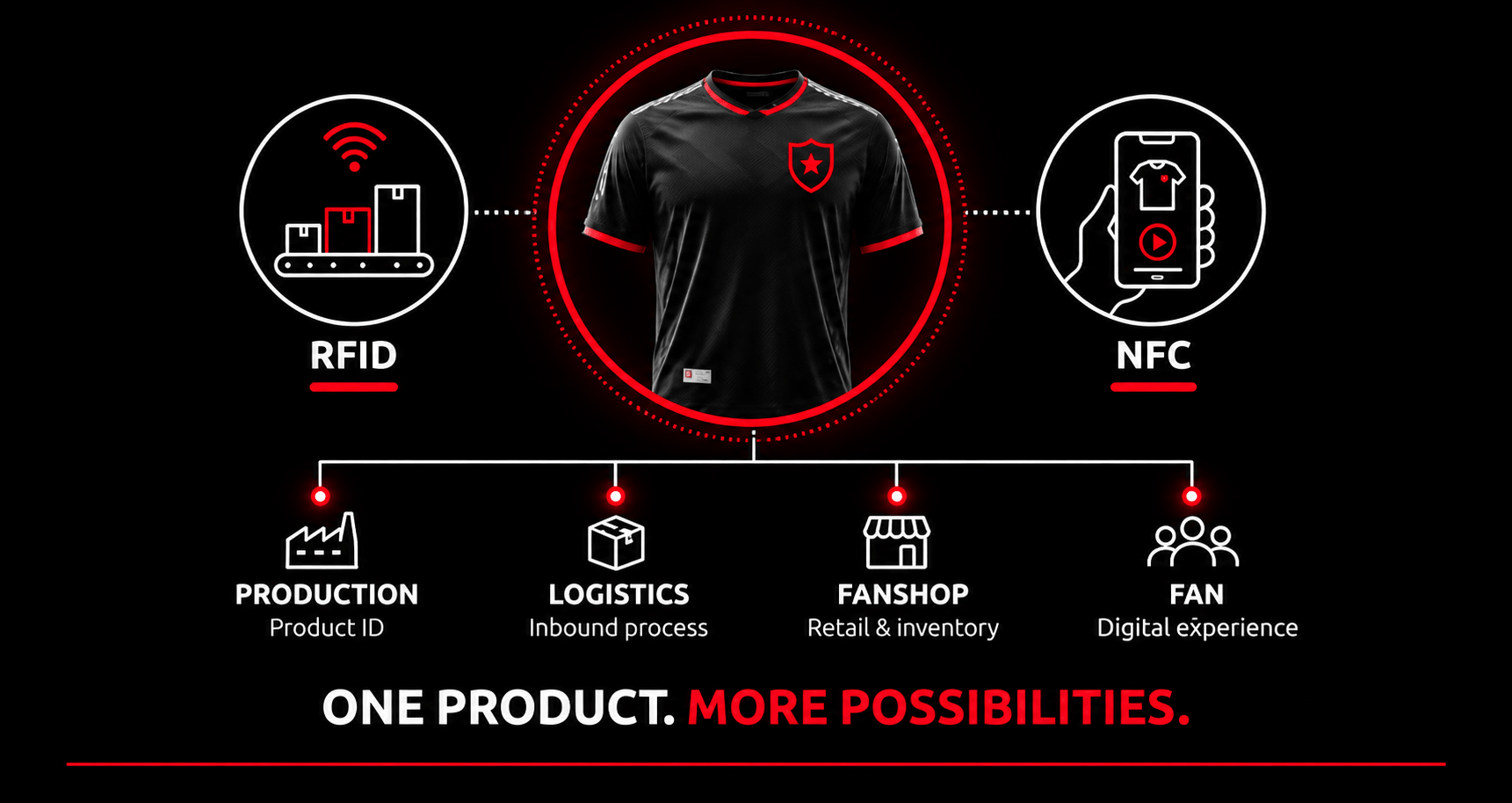
So far, we've mainly talked about inventory, logistics and club shop operations.
But a football jersey has a whole life ahead of it after the sale.
Fans wear it at the stadium, when playing football, on holiday or simply in everyday life.
And that's where another technology comes into play: NFC.
While UHF RFID is particularly useful for reading large quantities of products, NFC enables direct interaction between the product and the fan's smartphone.
With r-pac's TwinTag, both technologies can be combined.
A specially developed club crest or Authentic Label can therefore support operational processes in merchandising while also enabling digital fan experiences after the sale.
Two technologies. One product. Different possibilities.
Before the sale for the club. After the sale for the fan.
Imagine the journey of a jersey like this:
- During production, it receives its digital Product ID.
- When the delivery arrives, it can be identified using RFID.
- In the warehouse, the technology supports inventory management.
- In the club shop, it can support stocktaking, self-checkout or suitable loss prevention systems.
And then a fan buys the jersey.
The hangtag is removed. But the integrated technology remains.
By holding their smartphone close to the NFC-enabled club crest or Authentic Label, fans can access a whole range of digital experiences:
- Exclusive club content
- Player videos and interviews
- Competitions and special fan activities
- Access to exclusive offers
- Product information
- Product authentication through a suitable digital solution
The club can decide which content to offer through its chosen digital solution.
And that content can be updated even after the sale, without making any changes to the jersey itself.
Selling a jersey doesn't have to be the end of the interaction between the club and its fan. It can be the beginning.
New opportunities for sponsors, too
A fan might wear their jersey for many years.
So why not use it to provide access to special activities from the club and its sponsors throughout that time?
A fan could hold their smartphone close to the club crest to enter a competition, access an exclusive sponsor offer or discover a special promotion for the next home match.
A few weeks later, completely different content could be available.
The jersey itself doesn't need to change.
And not just on matchday or during a particular campaign.
A traditional design element can become a long-term digital connection between the club, its fans and its sponsors.
Keeping product information accessible
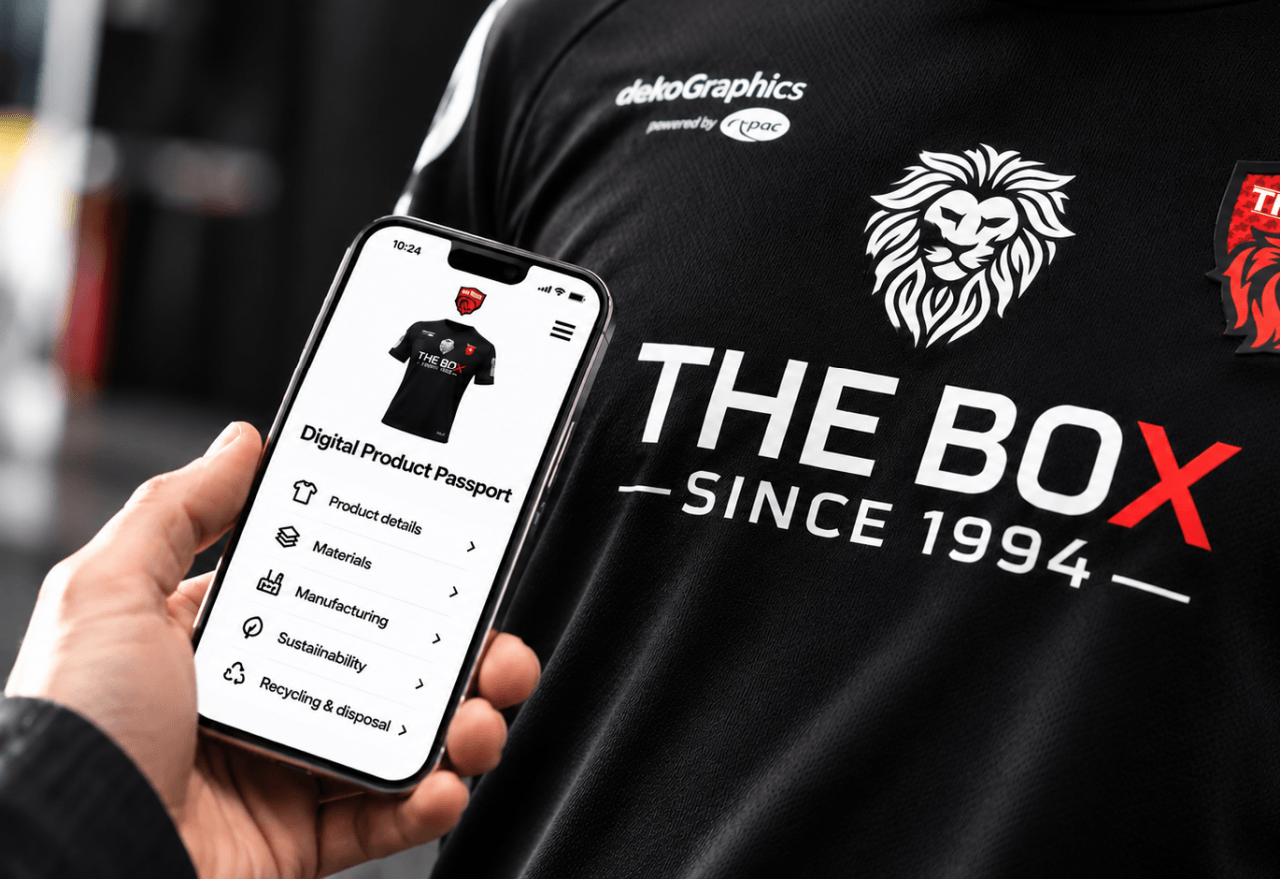
Permanently integrated NFC technology isn't just interesting for fan engagement.
It can also provide access to product information:
- Where was the jersey manufactured?
- What materials is it made from?
- How should it be washed and cared for?
With the upcoming Digital Product Passport (DPP) in mind, permanently integrated technology can also be a useful way to provide long-term access to digital product information.
After all, while a hangtag usually ends up in the bin after purchase, the club crest stays on the jersey.
This assumes, of course, that the technology is designed for the intended product lifespan and that the necessary product data is available digitally.
The technology needs to fit the jersey
A football jersey is worn, washed and regularly exposed to everyday wear and tear.
Permanently integrated technology therefore needs to meet different requirements from an inlay used in a traditional hangtag.
These include:
- Wash resistance and durability
- Size of the club crest or Authentic Label
- Materials and manufacturing methods
- Readability of the integrated technology
- Intended digital applications
The size of the inlay also plays a role.
While smaller NFC solutions may be suitable for fan engagement, authentication and digital product information, combined RFID and NFC solutions may require more space.
Not every club crest or Authentic Label is therefore automatically suitable for every application.
That's exactly why it's worth considering these questions early in the jersey development process.
Does every RFID inlay now need to go inside the club crest?
No.
There are good reasons to continue integrating RFID into hangtags, care labels or other product components.
Not every club needs the same applications. And not every product has the same technical requirements.
If RFID is mainly intended to support logistics, goods receiving and inventory management, an RFID-enabled hangtag can already be a very effective solution.
However, if the product needs to remain electronically identifiable after the hangtag has been removed, a permanently integrated solution is worth considering.
And if the club also wants to offer digital fan experiences, combining RFID and NFC could be an interesting option.
It's not about putting as much technology as possible into a jersey. It's about putting the right technology in the right place.
Why it's worth thinking about this during jersey development
When developing a new jersey, clubs and their partners consider many different details.
Materials, colours, fit, club crests, Authentic Labels and other design elements.
Perhaps there's another question worth asking in the future:
What else should this jersey be able to do?
- Should it simplify goods receiving?
- Should it support inventory management?
- Should it provide an additional layer of product protection?
- Should it offer long-term access to digital product information?
- Or should it create a digital connection between the club, its fans and its sponsors, even after the sale?
By asking these questions early, clubs and their partners can consider the right technologies from the very beginning of product development.
How can dekoGraphics and r-pac help?
Through our partnership with r-pac, we can now combine this experience with additional expertise in RFID, NFC, hangtags, labels and digital Product IDs.
Our goal isn't to favour one technology or product component over another.
We want to work with clubs and their partners to find the solution that makes the most sense for their products and intended applications.
Sometimes that's an RFID-enabled hangtag.
Sometimes it's a permanently integrated RFID inlay.
And sometimes it's a combination of RFID and NFC directly inside the product.
A club crest is still a club crest. But it can do so much more.

What else could your next jersey do?
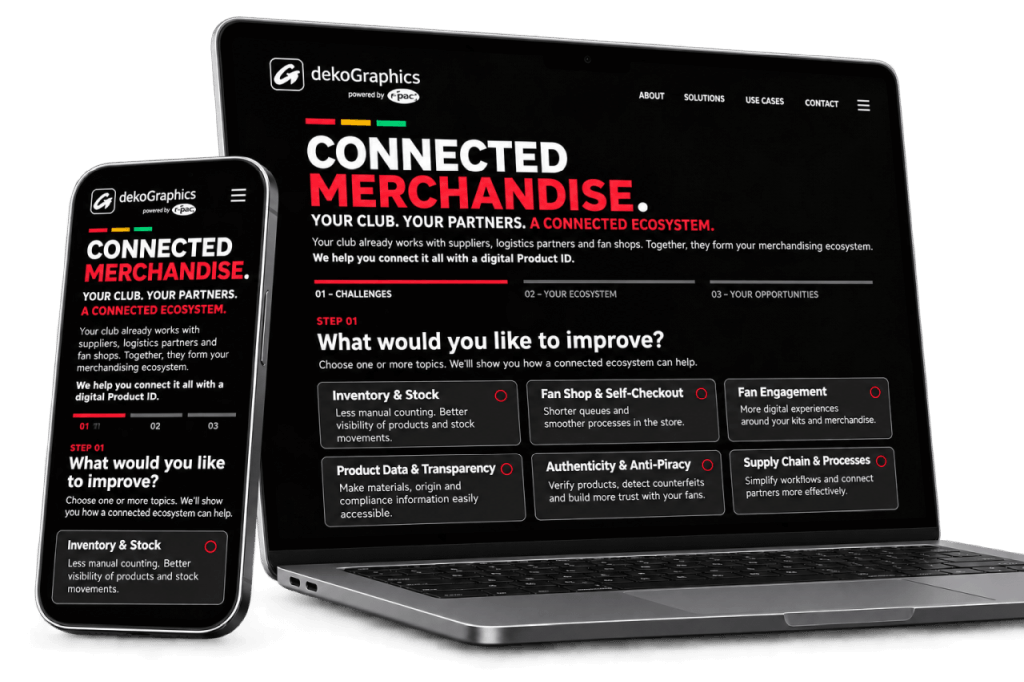
With our interactive CONNECTED MERCHANDISE EXPLORER, you can discover the possibilities that digital Product IDs can offer your club – from simpler warehouse and club shop operations to new digital experiences for your fans.
👉 EXPLORE CONNECTED MERCHANDISE
TRUSTED BY


